A seasonal clean with a sensible list
Spring cleaning
in London.
For the tasks that never quite
make the weekly list.
A spring clean is useful when the everyday routine has kept the home reasonably tidy but particular areas have been left for another day. Dust behind ornaments, marks on cupboard fronts and the edges around furniture can build up without requiring the same kind of treatment. Start by choosing what deserves extra attention rather than promising to do every possible household task at once.
A useful starting list
Choose the work
you keep putting off.
Walk through the home and note the rooms that need closer attention. Be specific: accessible skirting boards in the hallway, cupboard fronts in the kitchen, dust around low shelving or a bathroom surface with built-up deposits. A clear task list is more useful than asking for the whole property to be transformed in an unspecified visit.
Separate cleaning from organising decisions. Personal papers, ornaments, clothes and sentimental objects need your judgement about what stays and where it belongs. If you want help making areas accessible, explain that when booking. Do not treat a seasonal clean as automatic permission to discard items, rearrange collections or handle valuable belongings without discussion.
The kitchen:
pick the overlooked surfaces.
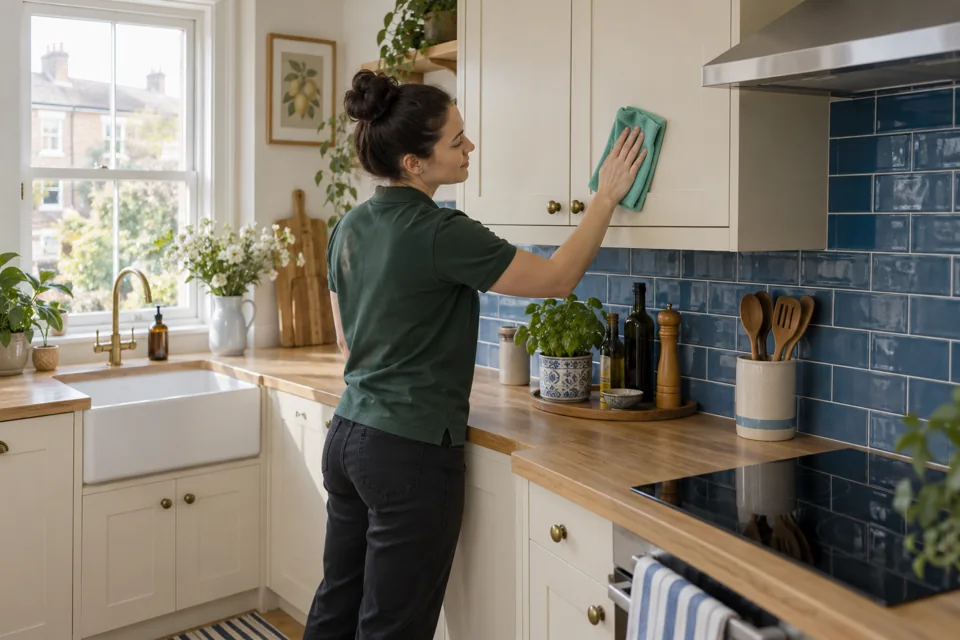
Daily kitchen use often leaves more than worktop crumbs. Cupboard fronts, accessible ledges, splashbacks and the areas around a hob can need attention beyond routine wiping. Explain where grease or deposits are present and mention delicate finishes. Cleaning methods should suit the surface; a painted cupboard, natural stone worktop and appliance panel are not interchangeable materials.
Appliance interiors are a separate scope decision. Request oven cleaning explicitly if the cooking compartment and racks need treatment. Fridge interiors, extractor work and other appliances should also be discussed rather than assumed to fit within a general kitchen task list. Remove food and personal items where necessary and confirm preparation before the visit.
Living rooms:
access makes the difference.
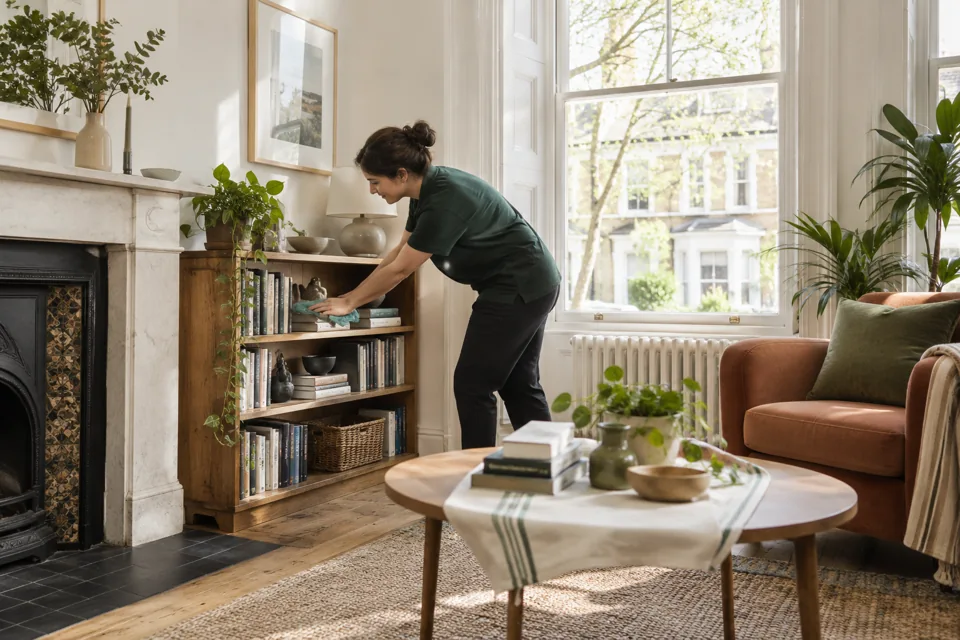
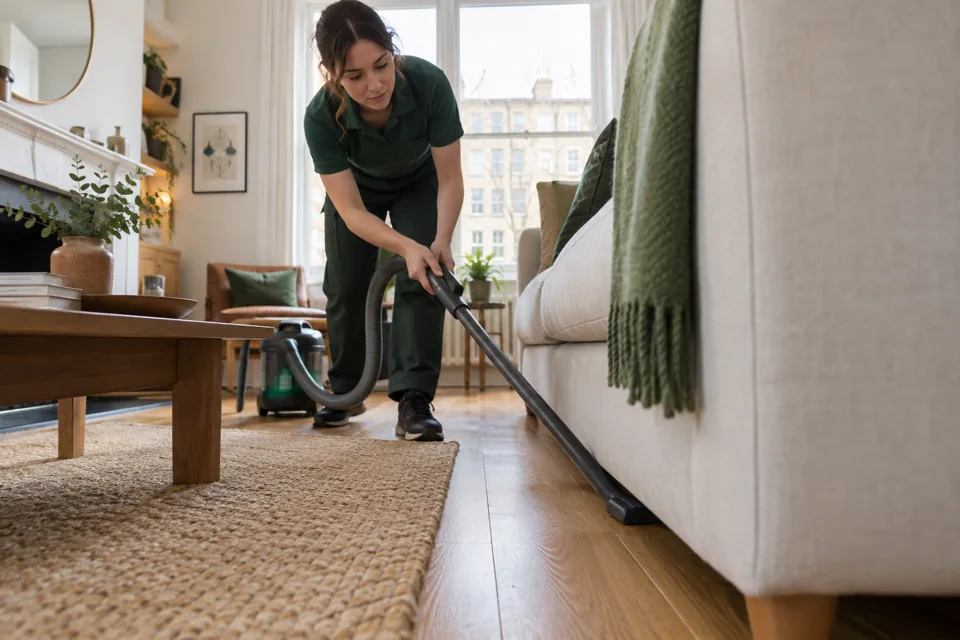
Low shelves, accessible furniture surfaces and floor edges are useful places to start. Collections, books and decorative objects can make dusting slower than the room size suggests. Decide what you can remove safely before the appointment, and point out fragile finishes or objects that should remain untouched. Heavy furniture moving needs its own agreement.
A spring clean does not repair worn upholstery or remove permanent carpet damage. If a particular fabric needs specialist attention, identify the item separately. Carpet cleaning involves assessment of fibre, marks and drying requirements, whereas routine vacuuming addresses loose household soil. Do not let the broad seasonal label obscure that distinction.
Small surfaces, real access
Bedrooms:
clear a practical working area.
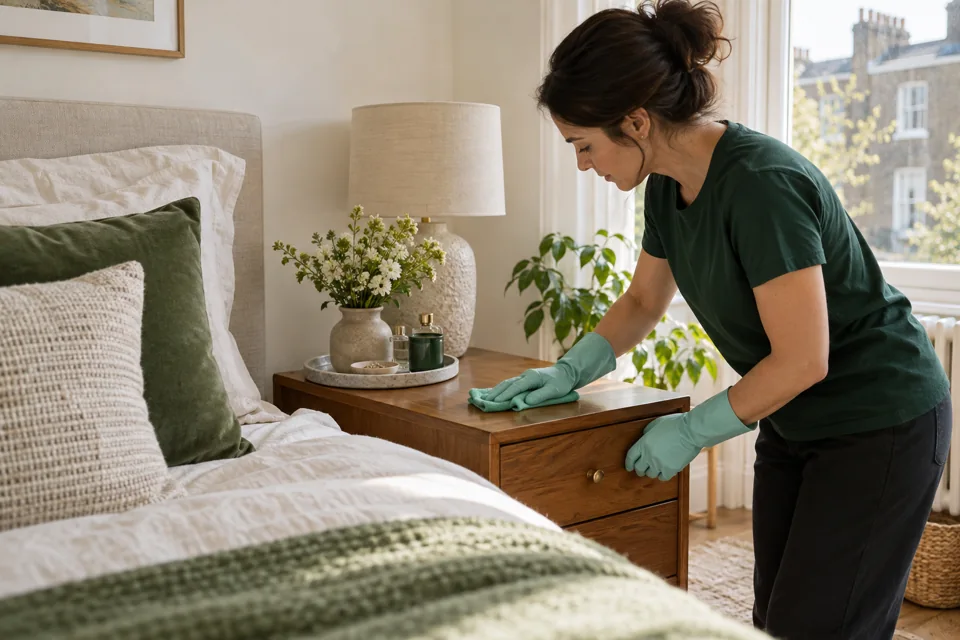
Bedside furniture, accessible wardrobe surfaces, mirrors and floors can be included in the priorities for a bedroom. Piles of clothing or packed storage make access difficult, even in a small room. Set aside personal belongings and explain which areas are available for cleaning. Sorting an entire wardrobe is a different project from cleaning its accessible surfaces.
Discuss whether bedding, laundry or the inside of cupboards forms part of the requested work. These should not be silently added to a cleaning plan after the appointment begins. If a room contains delicate wood, specialist flooring or items with care instructions, keep that information available so the team can assess the task appropriately.
Bathrooms:
distinguish deposits from defects.
Bath and shower surfaces, basins, toilets, mirrors and suitable floors are everyday cleaning priorities. A seasonal visit can give more attention to identified areas with accumulated deposits. Explain heavy limescale, delicate stone and coated shower glass before booking. The amount of work depends on the material and condition, not just whether the room is called a bathroom.
Cracked grout, worn sealant, leaking fittings and permanent staining do not become cleaning problems simply because a spring clean is planned. Keep maintenance concerns separate and mention any known moisture issue. The purpose of a cleaning appointment is to carry out the agreed suitable tasks, not to promise repair or replacement of damaged fixtures.
A longer list
is not always a better plan.
Choose a realistic combination of rooms and tasks. Cleaning access, detailed dusting and specialist additions can all increase the work. A home with many small objects may need a different amount of time from a largely clear property. The team needs a description of what is there rather than a request for an unlimited seasonal package.
Deep cleaning may be the clearer description when the main issue is substantial accumulated grime. One-off cleaning describes a single visit, which can include seasonal priorities if agreed. Discuss the actual work once and avoid assuming these labels mean that several overlapping appointments are necessary.
Before the visit,
make the priorities reachable.
- Prepare a short room-by-room list, with the most important tasks first.
- Remove small belongings from accessible surfaces without creating blocked walkways.
- Identify valuables, fragile objects and finishes needing special care.
- Explain furniture access and any items that cannot be moved safely.
- Confirm cleaning products and equipment, particularly for specialist additions.
- Mention pets, entry arrangements, parking and any fixed time restrictions.
Equipment may include cloths, suitable brushes, vacuuming and appropriate floor-cleaning tools for the agreed surfaces. A particular product or appliance treatment should not be chosen simply because a seasonal visit sounds comprehensive. Ask about the approach to any area that concerns you, especially where previous cleaning has caused damage or left residues.
A quote for the tasks,
not a seasonal slogan.
Cleaning House London provides individual quotes. Property size is one factor, but the condition, accessible surfaces, detail required and any specialist services matter as well. Explain your priorities and ask what the proposed price includes. Confirm VAT, minimum charges and the cost of additions before booking, rather than assuming the seasonal name represents one fixed tariff.
The visit length depends on that agreed scope. Ask for a useful estimate and identify anything you want completed before a deadline. If you change the list substantially, discuss the effect on time and price. After the clean, use regular domestic cleaning where helpful to keep everyday tasks under control, while reviewing neglected areas separately when they next need attention.
Keep the useful habits.
Leave the perfection test behind.
A seasonal clean should make the chosen tasks easier to manage afterwards, not create an expectation that a lived-in home will stay untouched. Keep accessible surfaces clear enough for routine dusting and deal with small spills in accordance with the surface’s care instructions. Follow any advice given for treated areas and avoid immediately applying another product to the same finish.
Check the agreed priorities after the visit. If you have a concern, identify the room and surface clearly when contacting the team. Retain the scope for reference and note which tasks you may want addressed differently next time. Improvement should be assessed against the work you agreed, rather than against an undefined promise to clean every possible corner.
Planning the occasional clean
Questions about
your seasonal list.
Do I have to book spring cleaning in spring? +
The useful part of the service is the occasional attention to neglected tasks, rather than a particular date. Tell the team what your home needs and ask about available appointments. A seasonal list can be discussed at another time of year, but availability and the suitable scope should still be confirmed before you make plans.
What is different from my usual domestic clean? +
A routine visit generally concentrates on repeat household tasks. A spring-cleaning brief identifies areas that have been missed or need more detail. Give examples rather than assuming there is a universal difference for every home. The practical distinction is the agreed task list and time, not a promise that all specialist services are included.
Will the cleaner organise or declutter my belongings? +
Discuss any help with making surfaces accessible before the appointment. Decisions about possessions, papers and valuable items remain a separate matter. Do not assume cleaning includes discarding belongings or reorganising storage. Preparing small items yourself can make the agreed surface work more practical and avoids uncertainty about what should be handled.
Can I include areas behind furniture? +
Explain the furniture and the areas you want reached. A small movable chair presents a different situation from a heavy wardrobe or fitted cabinet. Agree handling and access beforehand, and do not assume every item will be moved. Cleaning should be planned around safe practical access rather than an unrestricted promise to reach all hidden areas.
Are curtains, carpets and ovens included? +
Ask for any specialist item explicitly. Carpet and oven cleaning are separate listed services, while curtain or other fabric work should be assessed rather than assumed available. The material, care instructions and treatment needs may change the appointment and quote. A general spring clean is not a catch-all booking for every item in the home.
How much time should I reserve? +
Describe the rooms, their condition and the detail you want. The number of small objects, access around furniture and specialist additions can affect the working time. Request an estimate for the agreed list, with a margin if another appointment depends on completion. Review priorities if there is a fixed time limit rather than expecting unlimited tasks to fit.
Bring the list.
We can discuss the work.
Your postcode, the rooms and the tasks that matter most are a useful starting point for a seasonal cleaning quote.
All images are generated illustrations of seasonal cleaning, rather than actual staff or customer homes.