Domestic cleaning is household help with the practical work of keeping rooms clean. Kitchens, bathrooms, dusting and floors form a useful starting point, with the actual list agreed around the property and how it is used.
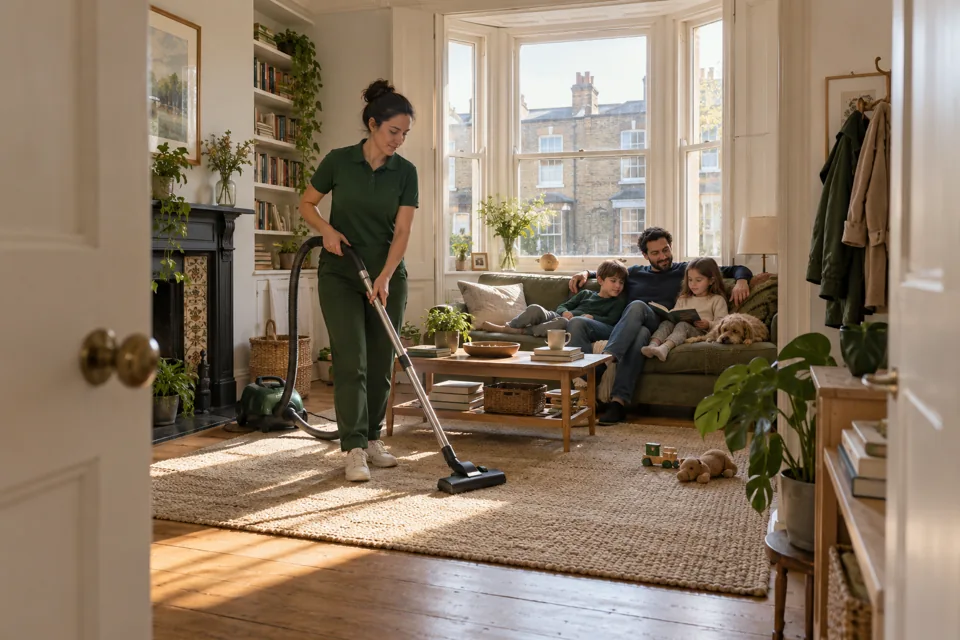
A household clean takes place around the things that make the property a home: furniture, belongings, people and sometimes pets. That is different from working through an empty property. Access, surface care and personal preferences need to be part of the conversation, so the cleaner can address the agreed tasks without guessing what should be moved or used.
Domestic cleaning can be discussed for a single appointment or an ongoing arrangement. It is suitable for residents who want help with selected rooms or a broader household list. The right brief comes from the work you need, rather than from how a home is described. A small flat can contain delicate materials and a detailed task list; a larger property can have a limited set of priorities.
Food preparation spaces
A usable kitchen, with the scope understood.
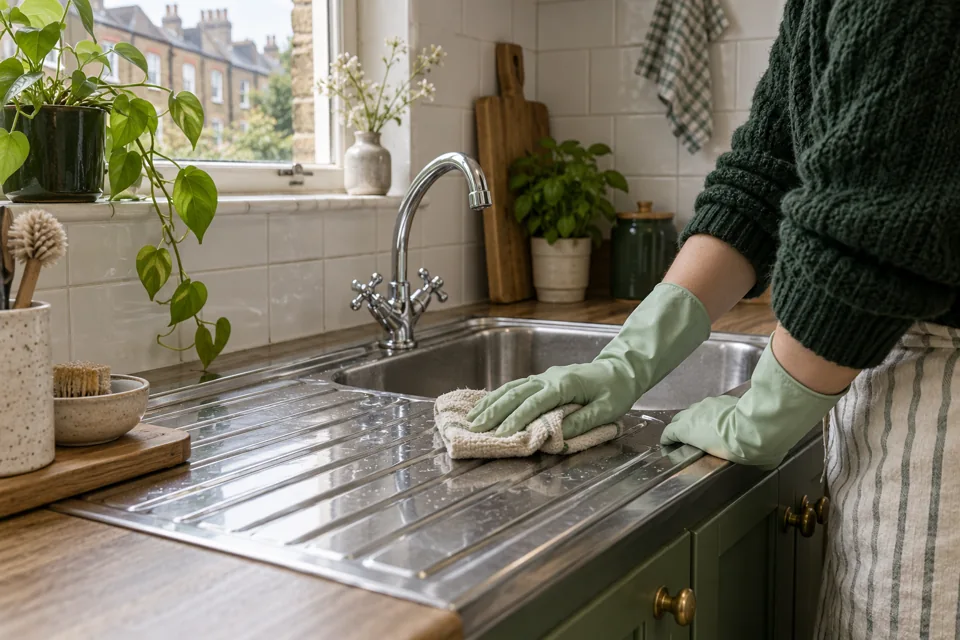
Accessible worktops, the sink, tap, cupboard fronts, hob surfaces and suitable flooring can be included in a kitchen brief. Tell the team which surfaces need particular care and whether the worktop will be clear. A kitchen with dishes, shopping and personal items across every surface requires different preparation from one ready for wiping.
Inside cupboards, the fridge and other appliances should be listed separately if needed. An oven-cleaning appointment involves work beyond routine kitchen surfaces. Explain the starting condition of extractor areas, splashbacks or heavily soiled edges before expecting them to fit within the same time. Food storage, washing up and disposing of household items also need explicit agreement.
Bathrooms and shared facilities
Specify the fittings, then the difficult areas.
Identify the basins, showers, baths, toilets, mirrors and floors you want cleaned. Point out delicate stone, plated fittings or surfaces with special care instructions. Different materials within the same bathroom can need different products and tools. Describe heavy limescale or accumulated soap residue in advance rather than leaving that assessment until the appointment is already under way.
Cleaning does not repair cracked grout, replace sealant or restore worn finishes. Remaining discolouration can have more than one cause, so it should not be promised away in a general quote. If there is extensive damp or mould, raise it separately rather than treating it as ordinary bathroom soil. A specialist assessment may be needed before deciding whether surface cleaning is appropriate.
Bedrooms and living areas need room to work.
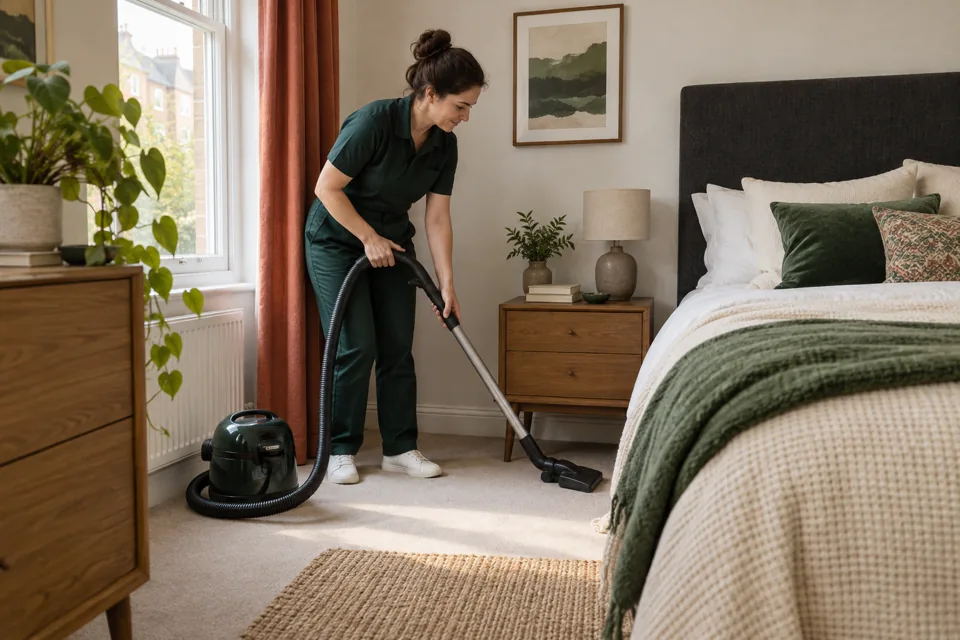
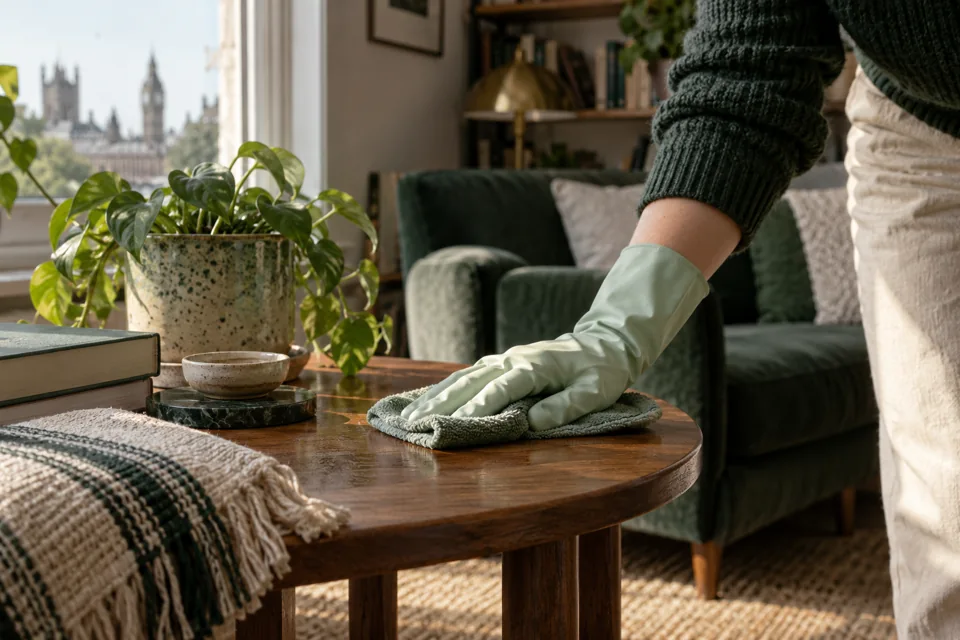
Discuss reachable dusting, vacuuming and suitable hard-floor care in bedrooms and sitting rooms. Bedside tables, shelves and furniture tops can only be addressed around an agreed approach to their contents. Put personal belongings where you want them, identify fragile ornaments and tell the cleaner about items that should not be touched.
Bed changing, laundry and ironing are not assumed inclusions in the basic surface-cleaning brief. Ask about the specific task and any preparation needed. Similarly, vacuuming is distinct from specialist carpet treatment, and wiping furniture is different from cleaning its upholstery. Keep those requests visible so the method and quote can be assessed properly.
Care instructions belong in the brief
Different finishes need different treatment.
Painted fronts, sealed wood, stone, glass and metal fittings should not be treated as interchangeable. Provide any manufacturer’s care guidance and explain treatments already applied to the surface. A cleaner needs to know about waxed furniture, unusual coatings or products you prefer to avoid. Uncertainty should be resolved before a stronger product is tried on a visible area.
Suitable cloths, brushes, a vacuum and floor-cleaning tools can support the agreed household tasks. Confirm which equipment and products are supplied for your booking, and whether any items are to be provided by you. Equipment availability is a practical arrangement; this page does not imply that every specialist machine is included in a domestic visit.
Decide how the help should fit into the household.
A recurring arrangement
If kitchens, bathrooms and floors repeatedly need attention, discuss regular visits and the schedule that suits the home. The domestic service’s published options include weekly, fortnightly and monthly appointments, subject to confirmation. Agree the list and time as well as the interval, so the routine does not depend on an unlimited set of requests.
An occasional appointment
A standalone visit can address a particular household list without establishing a repeat schedule. Where the starting condition calls for more detail, consider the tasks associated with deep cleaning. The distinction matters for estimating work, but the actual inclusions still need to be recorded for the chosen appointment.
If people are at home, agree the working route.
Tell the team about home working, sleeping children or rooms that must remain usable at certain times. A cleaner cannot resolve those arrangements by guessing which door can be opened. Explain pet arrangements too, including any room that should remain closed. Keep animals and children away from active cleaning and damp floors.
Entry, keys, alarms and building rules should be agreed directly. Confirm parking or lift restrictions that affect equipment access. If you will be away, identify a contact who can answer practical questions. Do not leave valuable belongings, confidential papers or unsecured medication in the area you have asked someone to clean.
The estimate should reflect the home as it is used.
Size, contents, condition and the number of tasks all influence the visit length. A room count is a useful starting point, but cannot show how much reachable surface work is involved. Describe the rooms you want included, the detail needed and anything that restricts access. The initial appointment may involve a different workload from later maintenance visits.
Quotes are individual, with no verified numerical domestic-cleaning tariff published here. Ask what the amount covers, whether VAT or a minimum charge applies and how additions are handled. A change in household use or a request for extra rooms can alter the estimate. Agree changes before relying on the earlier arrangement for a substantially larger brief.
Keep the arrangement easy to review.
At the end, check the priority areas against the work agreed and ask about drying or surface-care instructions. Raise an overlooked task promptly and distinguish remaining soil from permanent wear. There is no need to judge a whole appointment solely by an old mark that cleaning could not safely remove.
Between visits, keep requested surfaces accessible and communicate changes in the home. If a different product, room or task becomes important, update the brief. Practical feedback works best when it identifies the surface and work involved, so the next appointment can be discussed around a clear request rather than a general impression.
Household arrangements, answered before booking.
Can you clean while I work from home? +
Discuss the rooms you need and when they can be accessed. Vacuuming and movement between areas can interrupt calls, so the working route should be agreed beforehand. A room that remains occupied throughout may need to be excluded or reached at a different point in the visit.
Do I need to buy cleaning products? +
Confirm the supplies for the particular booking. If you want a preferred product used, explain its intended surface and any instructions. Do not assume either that everything is supplied or that the cleaner will use an unfamiliar product without checking its suitability.
Will the cleaner move my furniture? +
Identify what needs moving when enquiring. Heavy or fragile furniture movement is not an assumed household task. The work should be planned around safe access, with the extent of any small-item movement agreed rather than discovered during cleaning.
Can I request laundry or ironing? +
Ask about those tasks individually, including the quantity and equipment available. Their inclusion and effect on time need confirmation. A request for domestic cleaning does not by itself establish a laundry, wardrobe-organising or ironing service.
What if I have delicate floors? +
Give the material, finish and available care instructions before booking. Mention previous treatments or damage. The method should be selected around the surface, and uncertainty resolved before work proceeds; a stronger cleaner is not automatically an appropriate answer.
Can the priorities change between visits? +
Yes, a revised brief can be discussed. Tell the team what has changed and ask whether it affects the duration, supplies or price. Keep the essential tasks clear so a new request does not silently displace a room you still expect to be cleaned.
Describe the home. Agree the household work.
Call with your rooms, priorities and preferred appointment pattern.