Book around site readiness, not just a predicted finish date.
After builders cleaning deals with the cleaning work left after renovation or construction activities: settled dust, accessible residue and the agreed interior surfaces. It is distinct from managing an active building site. Explain what work has taken place, where dust has travelled and whether all trades have finished before asking the team to plan the visit.
Final cleaning is most useful when dust-generating work is complete, contractors have removed their tools and bulk waste, and the surfaces are ready for their permitted cleaning methods. If sanding, cutting or fitting continues afterwards, the cleaned areas can become soiled again. A provisional building date needs updating when the programme changes.
Separate the jobs that surround the clean
Completion, cleaning and snagging are different tasks.
The contractor’s clearance
Establish who removes rubble, offcuts, packaging and large waste before the cleaners arrive. Waste handling is not automatically included in a surface-cleaning appointment. Sharp items, loose fittings and unsafe areas should be resolved by the responsible contractor, with safe routes left through the property.
The cleaning brief
List rooms and surfaces, including cupboards, window areas, floors and fittings where required. Describe dust and residue separately from general household soil. The team can then assess the access, equipment and working time rather than treating the job as an ordinary domestic visit.
The snagging inspection
Missing fittings, poor paintwork, scratched glass and damaged flooring need to be recorded as building issues. Cleaning may reveal them more clearly, but does not repair them. Keep an existing snag list and photographs available so marks are not automatically attributed to a cleaning method.
Fine dust needs a controlled removal plan.
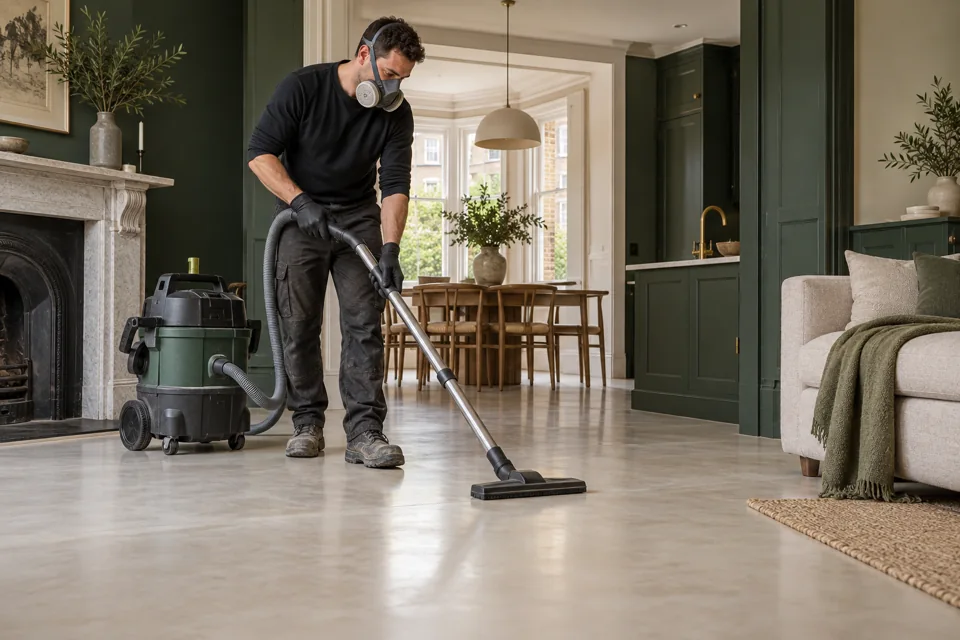
Dust can settle on ledges, floors, furniture and inside accessible storage even when the immediate work area looks tidy. Identify the materials involved and tell the team about the building activities. The approach must account for the dust risk and surfaces; ordinary household equipment should not be assumed suitable for construction residue.
HSE’s construction-dust guidance explains why uncontrolled dry sweeping can create exposure and why appropriate controls and extraction matter. Confirm the equipment and assessment for your job. This page does not claim the company carries every dust class of machine or provides hazardous-material clearance.
The new finish needs its own care
Fresh paint and fitted surfaces are not ready by appearance alone.
Provide the care instructions for new flooring, worktops, painted surfaces and fittings. Ask the installer or supplier when the surface is ready to be cleaned. Dry-looking paint, grout or sealant may still have a specified curing requirement; the cleaning appointment should respect that information rather than testing it with a stronger product.
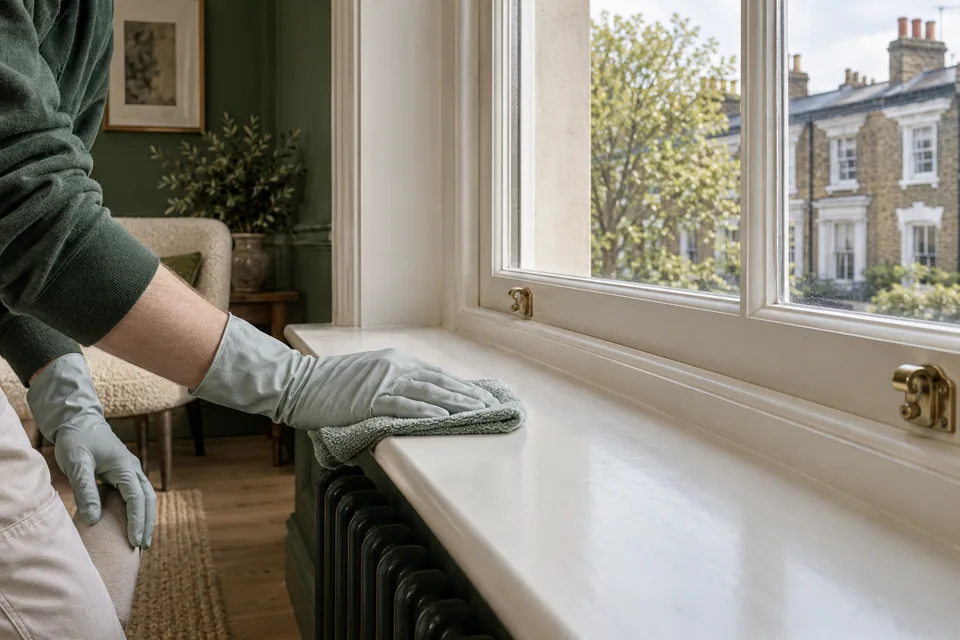
Accessible ledges, skirting boards, door areas and cabinetry can be addressed as agreed. Height, delicate coatings and incomplete fittings affect access. Cleaning walls and ceilings should be discussed specifically, with the finish and condition understood; it is not an unlimited inclusion established simply by the phrase after builders cleaning.
Paint, grout and adhesive need individual assessment.
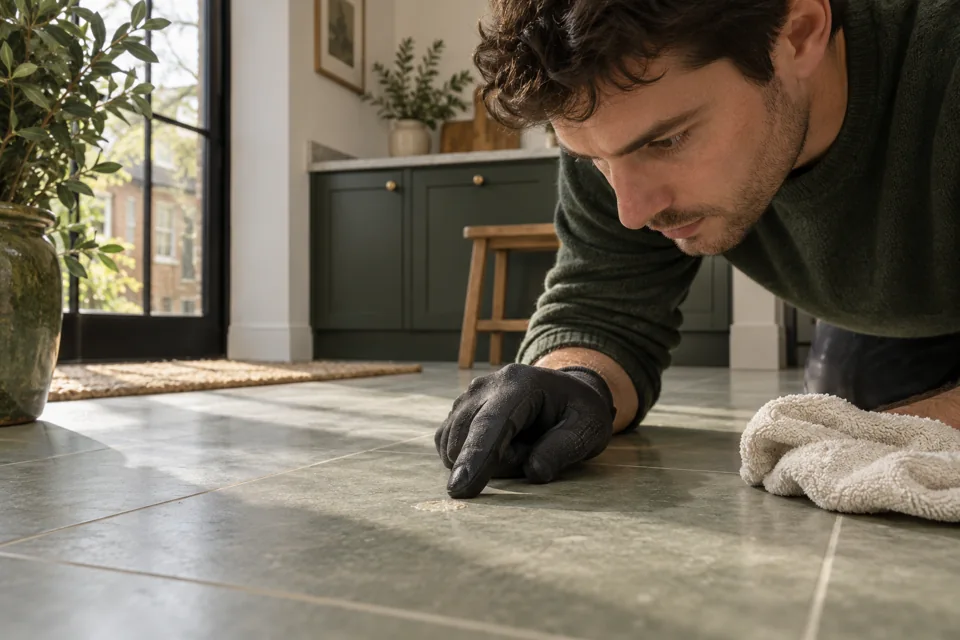
Give photographs of splashes or residue and identify the surface underneath. Dried paint on glass is a different problem from adhesive on a coated cabinet or grout haze on a delicate tile. The method should be compatible with both residue and finish, with a cautious test where appropriate. Scraping or strong solvents cannot be promised as a universal solution.
Some marks may be safely reduced; others can remain where further treatment risks damage. The work should distinguish removable residue from scratches, etching or damaged coatings. If the material is uncertain, ask the installer for information. A cleaner cannot responsibly guarantee removal of every construction mark from an unidentified surface.
Unknown hazardous dust is outside an ordinary clean.
Tell the team about any identified or suspected hazardous material before booking. Suspected asbestos contamination must be assessed by the appropriate specialists; do not disturb it, sweep it or ask ordinary cleaners to treat it as household dust. HSE’s asbestos information sets out the need for appropriate management and specialist work.
This service is not represented as asbestos removal, a hazardous-site clearance or a certificate that the property is safe to occupy. Completion records, safety checks and specialist assessments belong with the responsible contractors. A cleaning visit can address an agreed suitable brief once those issues have been resolved.
Make the handover practical for the cleaning team.
Confirm that dust-producing work is finished and update changes to the schedule.
Have bulk construction waste, tools and unsafe obstructions removed.
Provide surface-care and curing instructions from installers.
Explain water, electricity, parking, lift and key arrangements.
Identify rooms that remain occupied and belongings affected by dust.
Show existing damage, residue concerns and any safety restrictions.
Do not remove protective coverings indiscriminately if the contractor still requires them. Agree who removes them and when. Large furniture moves and cleaning underneath fixed installations need explicit discussion. A clear work area helps, but should not be created by dismantling fixtures or taking unnecessary risks yourself.
Work through the property without undoing finished areas.
The practical sequence may involve assessing residue, addressing suitable accessible dust, working through higher ledges and fittings, and completing floor care after other room tasks. The exact order depends on access and surfaces. Several controlled passes can be more appropriate than a single wipe where dust has settled broadly.
Ask what is achievable in the planned visit and whether a later touch-up is worth considering if other work will continue. No unlimited return visit is promised here. New dust after trades resume is a changed condition, so any subsequent clean needs a separate scope rather than being assumed part of the original result.
Estimate the extent of the work that actually remains.
Time depends on affected area, dust level, residue, furnishings, access and the detail required. Photographs and a room list help, but a larger or uncertain job may need further assessment. There is no fixed all-property duration. Explain any move-in deadline without expecting it to override safe methods or curing requirements.
Request an individual quote stating rooms, surfaces, residue treatment and exclusions. Ask about VAT, minimum charges and separately priced work. Window cleaning or carpet treatment may require their own method and scope. Once the renovation clean is complete, other detailed household work or ongoing domestic help can be considered independently.
Review cleanliness separately from building defects.
Check the agreed areas and identify remaining residue or inaccessible points at handover. Ask about floor drying and care before replacing furniture or protective items. Record defects for the contractor rather than repeatedly treating a damaged surface. Cleaning can make the finish easier to inspect, but is not a sign-off of workmanship.
Keep the property protected from further dust-generating activities after the visit. If fitting work must resume, discuss how it will affect the cleaned rooms and plan accordingly. A final clean is one stage in completing a renovation, with realistic limits around continued work, damaged finishes and areas that cannot be reached.
Questions at the end of a building project.
Can you clean before the builders leave? +
Explain what work remains and whether the area can be accessed safely. Continued sanding or cutting can undo cleaning. A final visit usually needs a completed, cleared work area; any interim appointment should have a separately agreed purpose and scope.
Is rubble removal included? +
Do not assume it is. Establish who removes bulk waste, sharp items and packaging before arrival. Surface cleaning and construction-waste clearance are different tasks, and the quote should make the boundary clear.
Can you remove every paint splash? +
Removal depends on the paint, surface and existing condition. Show the marks in advance. Compatible treatment may be possible, but no promise is made to remove all residue where that could scratch glass or damage a finish.
Should new grout be cleaned immediately? +
Get the installer’s curing and care instructions first. The cleaning method and appointment should be planned around that information. The fact that the fitting work appears complete does not establish that every new surface is ready for treatment.
What if dust contains an unknown material? +
Pause ordinary cleaning and seek the appropriate assessment. Tell the team what building work occurred and any known risks. Unknown hazardous dust must not be represented as a routine domestic-cleaning task.
Will dust return after cleaning? +
Further work, movement of dusty belongings or residue in inaccessible spaces can affect the room again. Discuss the practical limits at handover. A new deposit of dust is not evidence that one visit can guarantee a permanently dust-free property.
Tell us what was built. Show us what remains.
Call with the completed work, affected rooms and planned handover date.