Patio cleaning
in London.
Paving, joints and the surrounding garden
A suitable method
for the surface underfoot.
Outdoor paving collects soil, leaves and growth around its edges. Before cleaning, identify the material, condition and route for water, so the work suits the patio rather than simply applying the strongest pressure.
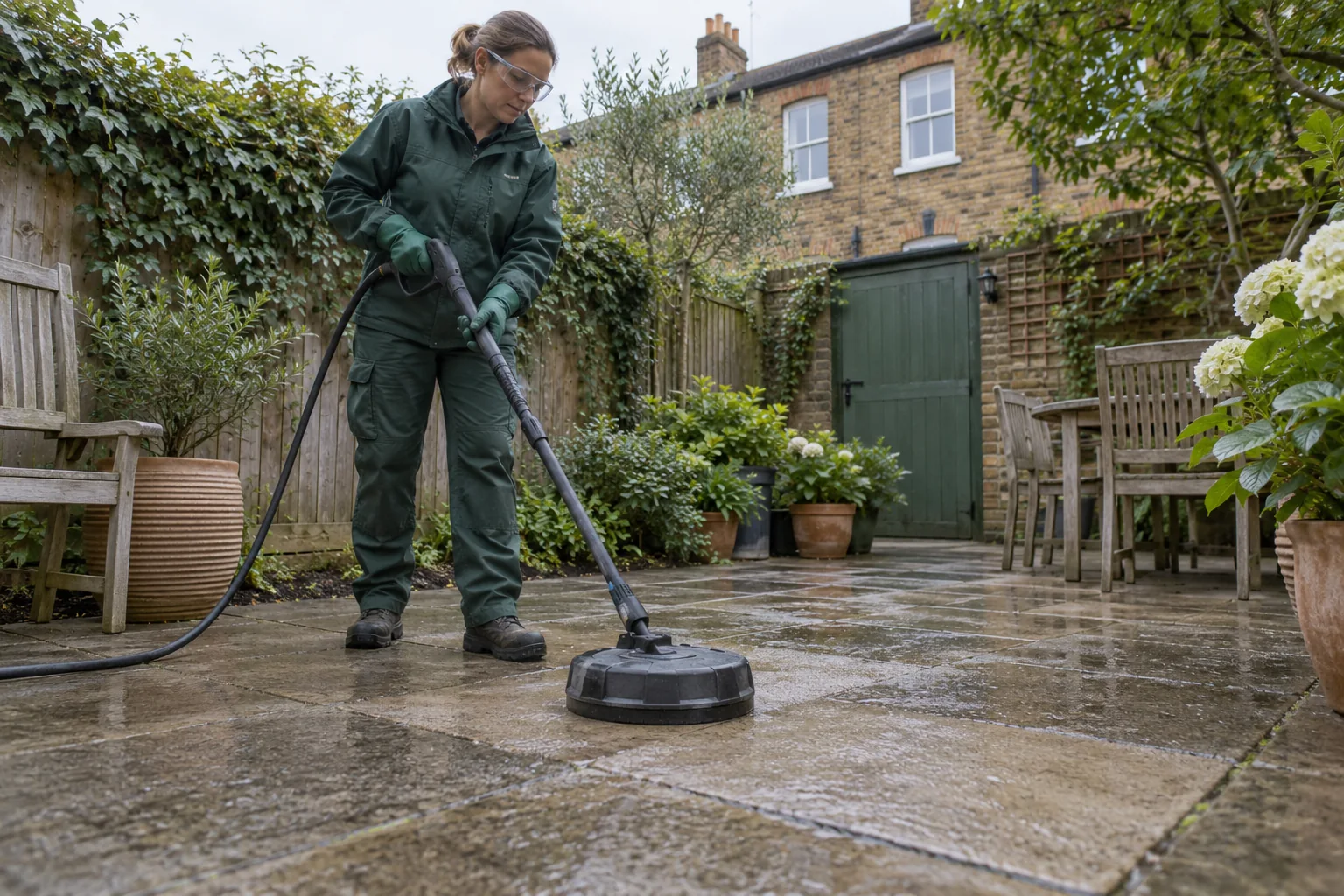
Start with the paving,
not the machine.
The patio-cleaning service addresses agreed outdoor hard surfaces and their accessible soil or growth. It can suit a seating area that has accumulated dirt, an outdoor space being prepared for use, or paving where moss and algae need assessment. The cleaning brief should identify exactly which areas are included, rather than treating the whole garden as one surface.
Stone, concrete, brick and exterior tiles differ in finish and care requirements. Provide any product information, previous sealant details and photographs. A textured slab and a delicate coated tile should not receive an assumed identical treatment. Existing cracks, loose pieces and worn joints also matter when deciding whether cleaning can safely proceed.
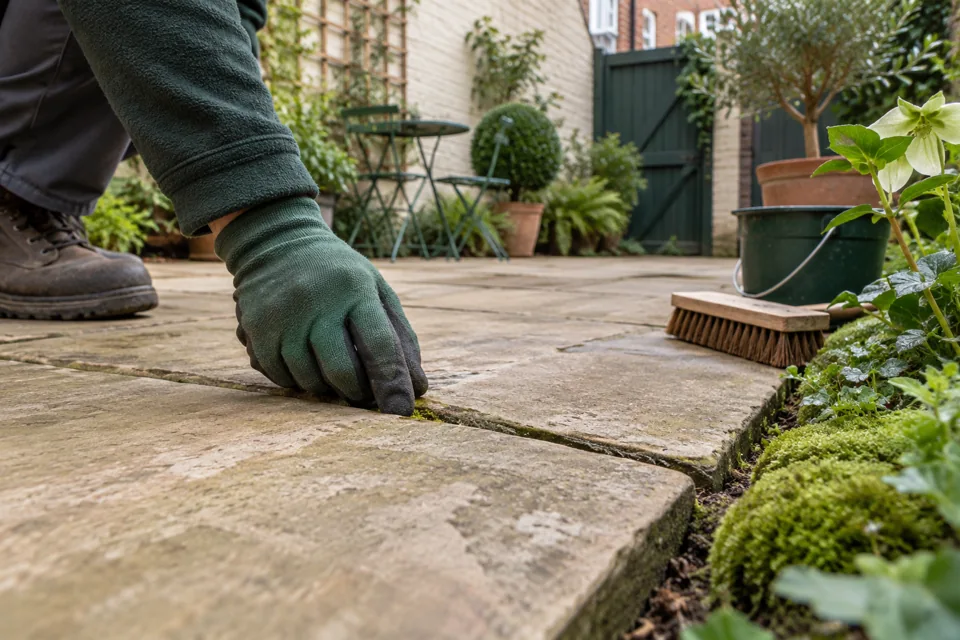
The spaces between the slabs
Joints are part
of the assessment.
Look for missing jointing, loose material or movement in the paving and show these areas to the team. Cleaning does not repair an unstable installation. A damaged joint can affect the appropriate method, and any replacement jointing or re-sanding must be discussed separately rather than being assumed part of washing the patio.
Manufacturer advice is useful here. Marshalls’ aftercare guidance cautions about cleaning pressure and joint condition. Follow the guidance for your own installed materials. The proposed process should respect the surface and joints, with a test area where appropriate instead of relying on an aggressive universal setting.
Pressure washing is an option,
not a cure for every mark.
Pressure washing may be suitable after the paving and joints have been assessed. Confirm what is suitable for your paving and what equipment will be used. A controlled attachment, compatible cleaning product or careful brushing may form part of the process, depending on the material and assessment. Product instructions and surrounding plants must be considered.
Oil, rust, paint, lichen and general soil are different problems. Explain particular marks beforehand and avoid adding household chemicals while waiting for advice. Some staining or natural colour variation may remain. Cleaning is not a guarantee of uniform colour or an unused appearance, and repeated high-pressure passes can be inappropriate for the surface.
Water needs somewhere
appropriate to go.
Tell the team about water access, drainage and areas where runoff could affect planting, neighbouring property or indoor thresholds. A cleaning method using water needs practical planning. Blocked drainage, standing water and poor falls are installation or maintenance issues that cleaning alone cannot necessarily resolve.
Loose leaves and debris should be gathered rather than simply driven into a drain. Discuss how residue and wastewater will be managed for the actual job, especially where treatments are involved. Do not assume every outdoor cleaning product can be released into any drain or onto planting; the product and site requirements need to be respected.
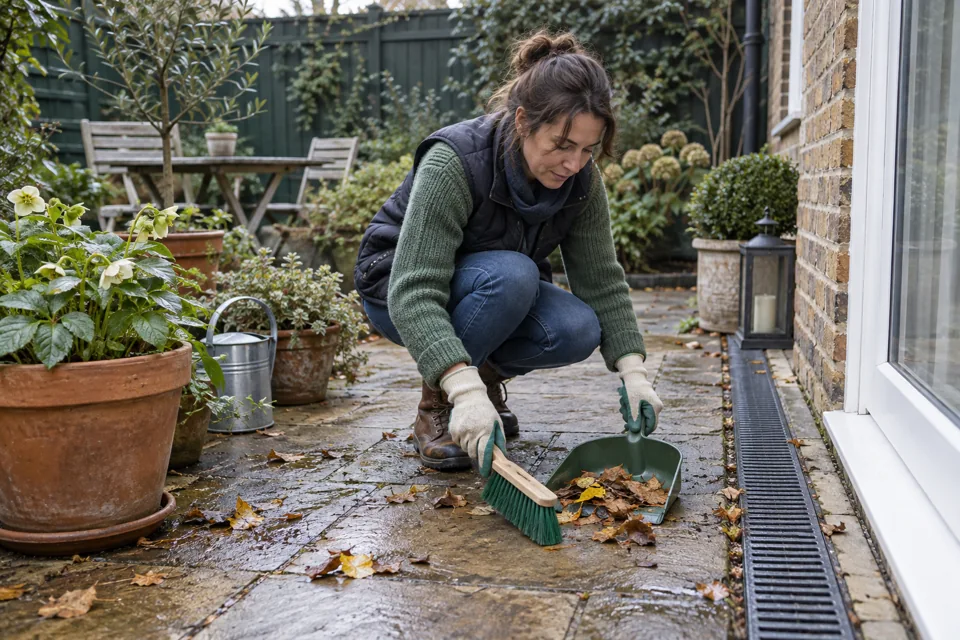
Clear the area
and explain the route.
- Identify the requested paving and give approximate dimensions or photographs.
- Move manageable chairs, toys and loose items as agreed.
- Point out heavy planters or furniture that cannot easily be moved.
- Confirm gate width, equipment access, water and any power requirements.
- Explain fragile planting, neighbouring boundaries and runoff concerns.
- Keep children and pets out of the working area.
Access through the home may need a separate arrangement to protect indoor floors. Tell the team about steps, narrow passages and shared entrances before booking. Large item movement, fence cleaning and waste clearance should be quoted explicitly if required, rather than arriving as unmentioned additions.
Growth on the surface
and garden work are distinct.
Discuss moss, algae and edge growth in relation to the paving. Removing surface soil does not establish that roots, vegetation or the wider garden have been addressed. If borders and overgrowth need attention, garden tidy-up work is a separate conversation. Keep the outdoor jobs divided by what actually needs doing.
Glass affected by the work can be discussed with window cleaning. For an occasion involving indoor and outdoor spaces, a one-off household visit may be relevant, while a broader seasonal indoor list belongs with spring cleaning. Combining enquiries does not make every service an automatic inclusion.
Measure the area.
Describe its condition.
Working time depends on size, layout, material, deposits, obstacles and access. A small patio with many steps and fixed pots can require more detailed handling than a larger clear rectangle. Weather and site conditions also affect whether work can proceed as planned; discuss arrangements if the forecast or surface condition changes.
Prices are quoted individually. Ask what the quote includes, whether VAT or a minimum charge applies, and how specialist stain treatment or additional surfaces are priced. No verified per-square-metre rate is published here. Repointing, sealing, re-sanding and repair should be identified as separate work unless expressly agreed.
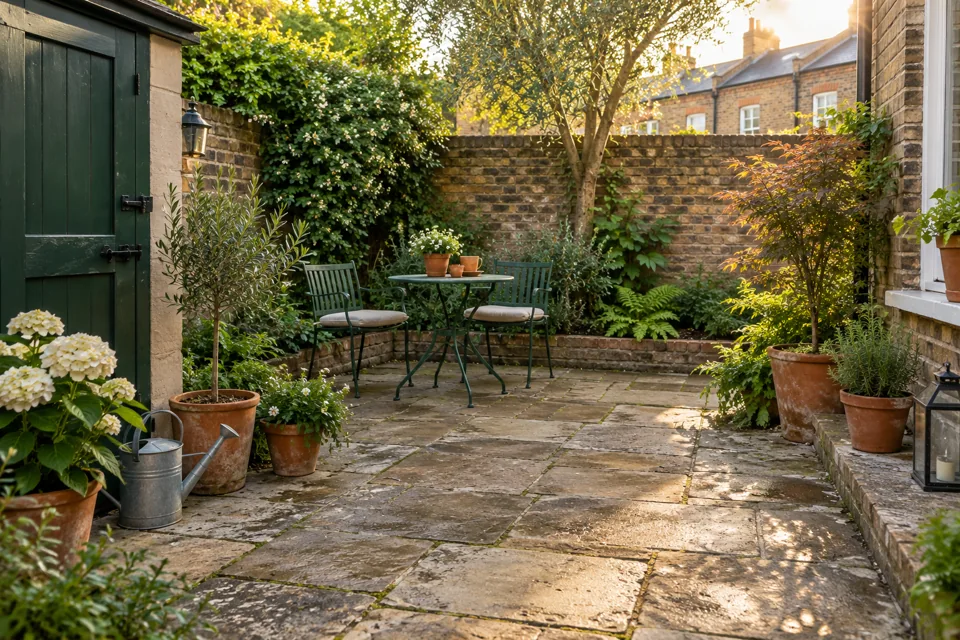
Use the space
when the surface is ready.
Ask about drying, any product restrictions and when furniture can be returned. Wet paving can still require caution, and cleaning does not certify a slip-proof surface. Keep people away from the active area until the team confirms the relevant re-use instructions. Treatments may have requirements beyond the time spent washing.
Afterwards, follow your paving manufacturer’s maintenance advice and deal with leaves or spills appropriately. Growth may recur because shade, moisture and surroundings continue to influence the patio. There is no promise that one visit permanently prevents algae or weeds. Note jointing defects for the appropriate maintenance work rather than treating them as dirt.
Outdoor questions
before the hose is connected.
Can all patios be pressure-washed? +
No universal method is suitable. Material, finish and joint condition need assessment. Provide product details and existing damage so the proposed treatment can be checked before work begins.
Will the joints be repaired afterwards? +
Repairs, re-sanding and replacement jointing should be discussed separately. Do not infer that they are included in a washing quote. Show missing or damaged material when enquiring.
Can every dark spot be removed? +
Different marks require different assessment. Age, penetration and material affect the result, and some variation may remain. There is no guarantee of a uniform new appearance.
Do I need an outside tap? +
Explain the water supply available and ask what the selected method requires. Also confirm equipment access and drainage. The practical arrangement should be settled before arrival rather than assumed from the presence of a garden.
Is sealing included? +
Not automatically. Sealing involves product suitability and preparation beyond surface cleaning. Ask whether it can be arranged and how it affects the scope, price and time before using the patio.
Will cleaning stop growth returning? +
Not permanently. Moisture, shade and vegetation remain factors after the surface is cleaned. Ask about suitable ongoing care, while recognising that maintenance and repair are distinct from a single cleaning result.
Tell us the material.
Show us the outdoor space.
Call with the patio size, condition and access details.
These generated outdoor scenes illustrate the service topics. They are not real customer before-and-after evidence.