Specialist floor care
Carpet cleaning
in London.
Start with the fibre. Then the marks, the room and the time you have.
A carpet can look tired for several different reasons: loose soil between the fibres, a spill that was never fully removed, flattened pile along a walking route or permanent colour loss. Those problems do not all respond to the same treatment. A useful carpet-cleaning appointment begins by identifying what is present and deciding what the material can safely tolerate.
Cleaning House London lists carpet cleaning as a specialist service. Call with the rooms you want treated, any information about the carpet and the marks that concern you. Explain whether the property is furnished and when you need to use it again. That gives the team a sensible starting point for the scope and an individual quote.

The material sets the limits
Not every carpet
can be cleaned the same way.
Keep the fitting invoice, care label or manufacturer’s information if you have it. Appearance alone may not identify the fibre or backing accurately. A carpet can also contain a blend, while its construction, dyes and previous treatments affect the practical choices. Mention loose seams, ripples, damaged edges or a history of shrinkage before work starts.
| What you know | Why it matters | What to tell the team |
|---|---|---|
| Wool or a wool blend | Products and moisture need to suit the fibre and construction. | Any label, previous cleaning or specialist care instructions. |
| Synthetic fitted carpet | A suitable approach still depends on the backing, condition and marks. | The room, age if known, and anything already used on stains. |
| Unknown or delicate material | Identification and testing may be needed before proceeding. | Uncertainty, colour changes, delicate areas or unusual finishes. |
| A separate rug | Dyes, fringes and woven construction may require a different service. | Whether the item is a rug rather than fixed wall-to-wall carpet. |
WoolSafe’s consumer guidance is a useful reference for wool carpet care; it does not mean this company holds WoolSafe certification. Follow the manufacturer’s instructions and discuss material-specific restrictions rather than assuming that a familiar cleaning product is suitable.
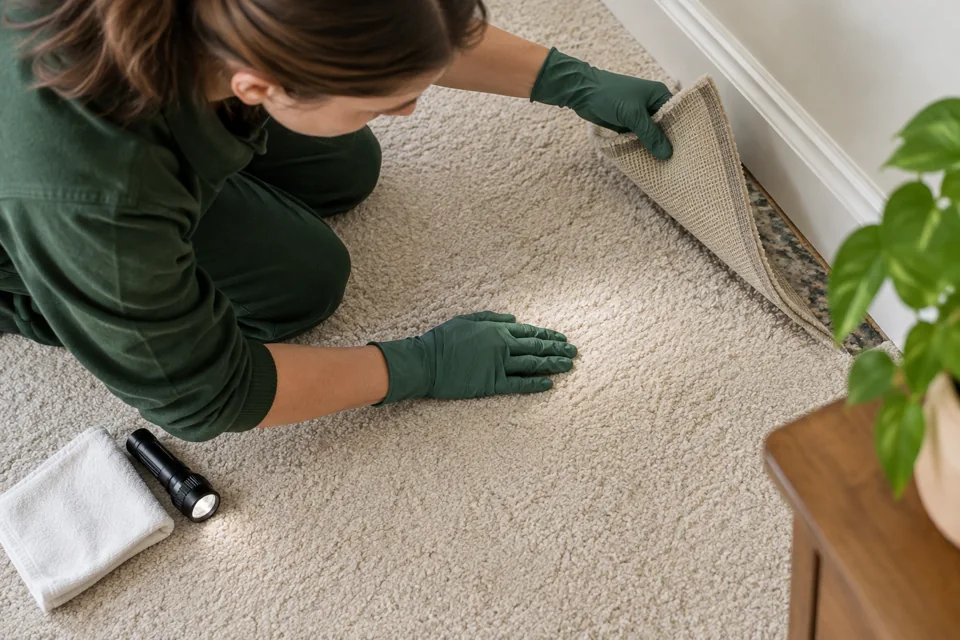
The inspection is
part of the decision.
Point out the marks before furniture is moved or products are applied. Useful information includes what was spilled, roughly when it happened and whether it was treated with a household spot remover. A fresh drink spill, an oily mark and a patch of discolouration are different starting points. Previous products can leave residues or change how a mark behaves.
Testing an inconspicuous area helps assess a proposed treatment, but a small test cannot promise the same result everywhere. Photograph damage you are already concerned about and agree which areas should be left alone. If the carpet has a manufacturer’s warranty, keep its cleaning requirements available so the proposed method can be checked against them.
Marks can improve.
Damage may remain.
Cleaning removes soil; it does not replace missing colour or rebuild worn fibres. Bleached patches, burns, ingrained wear and some dye transfers may remain visible. Stain removal is therefore an assessment, not a guarantee that every patch will disappear. Ask which marks are likely to respond and where the cleaner expects a limited result.
Repeated scrubbing can make an uncertain mark harder to assess. Avoid adding several different products while waiting for an appointment. Tell the team what has already been applied, even if it seemed harmless. Strong fragrances or a surface stain treatment do not establish that an underlying odour has been resolved; mention recurring smells and any known source beneath the carpet.
Method and moisture
Agree the approach.
Leave time for drying.
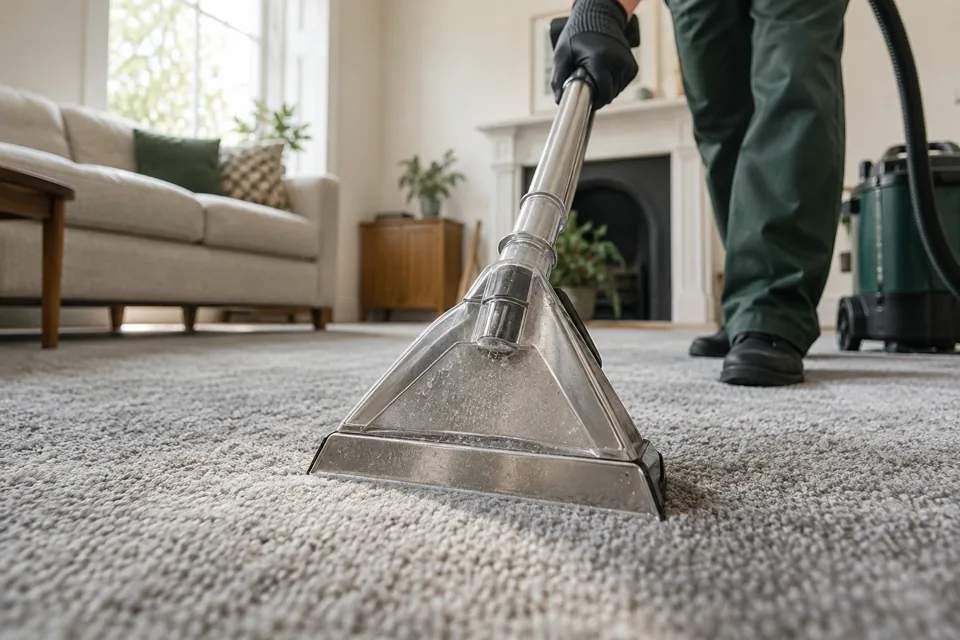
The cleaning method must be appropriate to the carpet being assessed. Vacuuming removes loose material; a suitable cleaning process then deals with remaining soil, with attention to moisture and extraction where those are used. Ask which stages are included in your appointment rather than assuming that every advertised method applies to your carpet.
An extraction wand, machine and connected hoses can be part of the equipment for suitable carpets. Other materials or circumstances may call for a different approach, or for work to be declined. The photographs here illustrate equipment and preparation; they are not confirmation that a particular machine, chemical or cleaning method will be used for every booking.
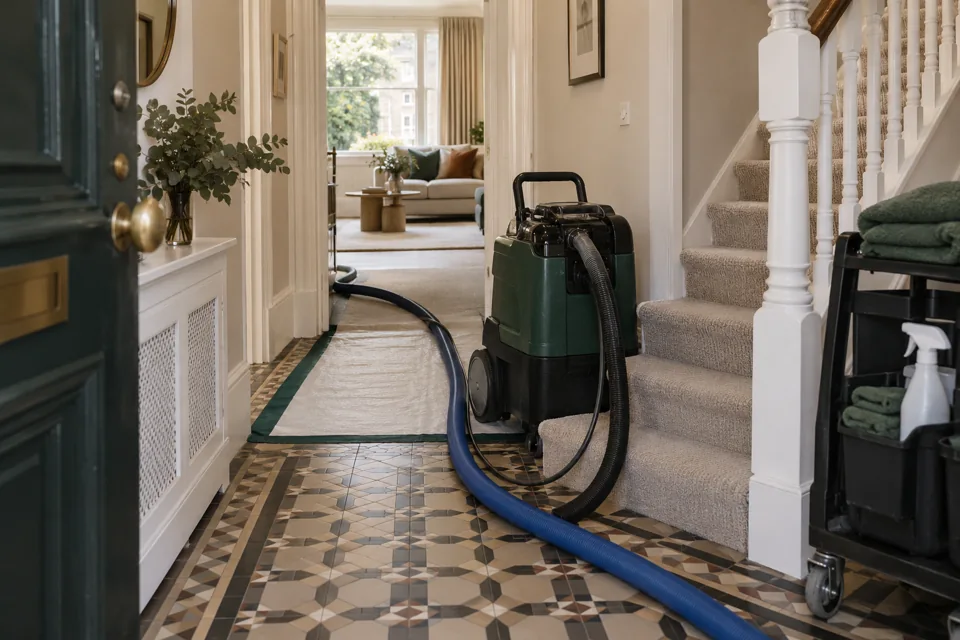
Clear the route,
not just the carpet.
Remove small loose belongings from the areas being cleaned and discuss larger furniture beforehand. Heavy wardrobes, electronics and fragile objects should not be assumed to be included in furniture moving. Tell the team about stairs, parking, entry arrangements and the distance from the entrance to the rooms. Equipment needs a practical route through the home.
Keep pets and children away from the working area and tell the cleaner about any access restrictions. Confirm power and water requirements for the agreed method. If you live in a managed building, check entry rules and any restrictions on carrying equipment through communal spaces. Arrange the visit around those details rather than discovering a restriction when the team arrives.
A quote based
on the rooms and the work.
Cleaning House London publishes individual quotes, rather than a carpet-cleaning starting tariff. Room sizes, the number of areas, material, condition, stairs, stains and access can affect the proposed work. Ask whether the quoted scope includes routine spot treatment, any separately assessed marks, furniture arrangements and the relevant drying advice. Confirm the total, VAT position and any minimum charge before booking.
Carpet cleaning is separate from general house cleaning. If you are organising a tenancy handover clean, identify carpet work in the quote explicitly. A property needing broader attention may also benefit from detailed cleaning of kitchens and bathrooms. Regular domestic visits address ongoing household tasks, while mattress cleaning is a separate discussion about another material and item. Choose additions because they are needed, rather than expecting one appointment to cover everything.
Questions about your carpet
Before the machine
comes through the door.
Can you remove every stain? +
No result should be promised without assessing the mark and material. A stain may improve, remain partly visible or be permanent. Colour loss, burns and worn pile are damage rather than removable soil. Explain what caused the mark and which products have already been tried so the cleaner can discuss realistic expectations before treatment.
Do I need to know the carpet fibre? +
You do not need to identify it yourself, but any label, invoice or manufacturer’s care instructions are useful. Say if you are unsure rather than guessing. The fibre is only part of the assessment: backing, construction, dye stability and existing damage also influence the proposed approach. A delicate or unidentified material may need further specialist advice.
How long does a carpet-cleaning visit take? +
The number and size of the rooms, furniture access, condition and treatment requirements affect the time. Stairs and awkward routes can add work. Ask for an appointment estimate based on those details, and distinguish working time from the drying period afterwards. There is no fixed duration that suits a small clear room and a heavily furnished property equally.
Will the team move all my furniture? +
Discuss this before the appointment. Small movable items and heavy or fragile furniture create different handling requirements. Remove your personal belongings and confirm which items the cleaner can work around or move. Do not assume wardrobes, fitted furniture, televisions or valuable objects will be shifted as part of a standard carpet-cleaning quote.
Can carpet cleaning be booked with a move-out clean? +
Ask for carpet cleaning as an explicit part of the overall scope. An empty home can make access simpler, but the material and stains still need assessment. Coordinate the appointment with the handover date and allow appropriate drying time. A landlord’s decision about the deposit depends on the tenancy and property condition, not carpet cleaning alone.
What should I do if a mark returns after drying? +
Keep a photograph and contact the team with the area affected, when it became visible and what has happened since the visit. Avoid immediately applying another product. A returning mark can require assessment of residues or material beneath the surface; it is not something to diagnose from a photograph alone or cover with a general guarantee.
Tell us about
the carpet you have.
Your postcode, rooms, fibre information and the marks that concern you are the useful starting points. Call to discuss the scope, appointment and quote.
All photographs on this page are generated illustrations, not staff portraits or completed customer jobs.