Cleaning HouseLONDON / HOME CARE020 3404 5122

Moving & property care

End of tenancy
cleaning in London.

The belongings are leaving.
The cleaning still needs a plan.

A tenancy handover brings several jobs together: packing, removals, keys, access and the final inspection. Cleaning is easier to organise when those jobs are placed in a sensible order. Start with the property’s current condition and the cleaning requirements you have been given, then agree what needs doing and when the team can reach it.

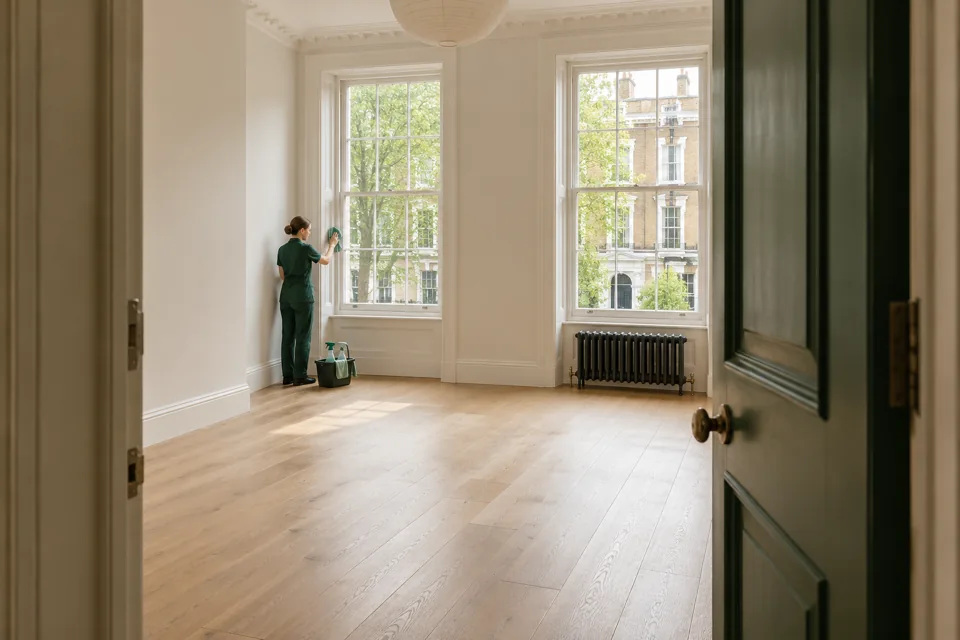
Illustration of an empty London rental flat being prepared for a cleaning visit

The checklist is
more useful than a promise.

Cleaning House London offers end of tenancy cleaning as a separate property service. A useful brief includes the number of rooms, whether they will be empty, the appliances present and any particularly affected areas. Share the check-out instructions, but also explain anything unusual: a cupboard that cannot be opened, a broken fitting, a delicate worktop or a carpet that needs assessment.

An inventory can help identify the areas that will be checked. It does not turn every item in the document into a cleaning task. Missing furniture, damage, decoration and maintenance are separate matters. Keep those issues distinct when requesting a quote so the team can assess cleaning work rather than being asked to resolve the whole handover.

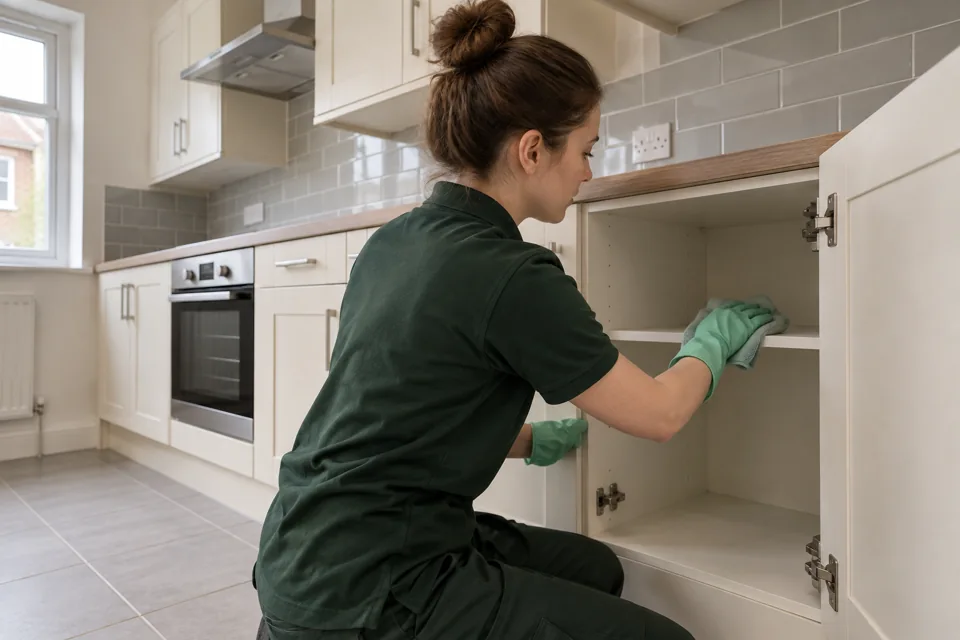
Illustration of a cleaner wiping inside an empty kitchen cupboard

The room with the most moving parts

Empty cupboards.
Appliances discussed separately.

Kitchens often need the most detailed scope. Once food, crockery and personal items have been removed, accessible cupboard interiors can be assessed properly. Worktops, sinks, taps, splashbacks and suitable floor surfaces create another set of tasks. Point out grease, crumbs, spills and material that needs special care rather than describing every kitchen as the same job.

Do not leave appliance requirements implicit. Specialist oven cleaning is a listed service and should be identified clearly in the quote. Ask about racks, trays, hob and extractor work if these matter for your handover. Fridges and freezers need emptying and any necessary preparation agreed beforehand; a cleaning booking is not a promise that a frozen or food-filled appliance can be dealt with immediately.

Room-by-room scope

Work through
what is actually there.

Bathrooms and toilets

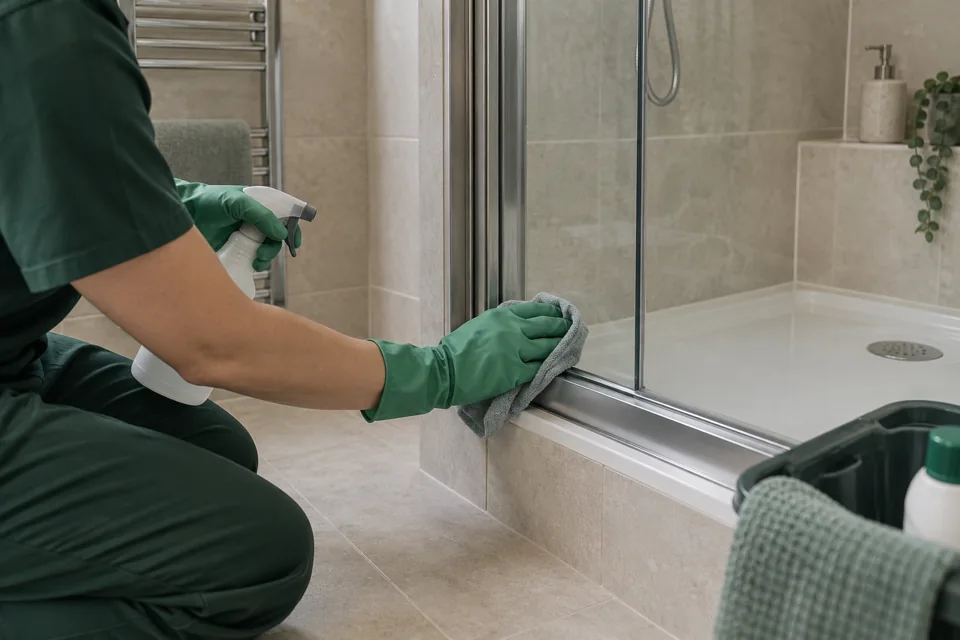
Discuss basins, bath and shower surfaces, toilets, mirrors, fittings and flooring. Heavy limescale, damaged seals and discoloured grout need realistic assessment. Cleaning a surface does not repair cracked tiles or failed sealant. Mention natural stone, coated glass or other finishes with specific care instructions, especially where a previous product has caused damage.

Bedrooms and living rooms

Accessible furniture, surfaces, ledges and floors can be included in the agreed checklist. Empty rooms make the visible areas easier to reach, but fixed cupboards, heavy beds and remaining belongings still affect access. Clarify whether inside wardrobes, doors, skirting boards and touch points are priorities rather than assuming that an unspecified whole-property clean covers every detail.

Hallways, stairs and entrance areas

These spaces collect traffic marks and moving-day dust. Describe the floor coverings, stairs and the route through the building. Communal areas are not automatically part of the rental property’s booking. Check with the agent or building manager before requesting work outside the flat or house, and confirm who can authorise access to those areas.
Separate cleaning
from repair work.

It is helpful to identify existing damage before the appointment. Scratched surfaces, missing parts, permanent staining and worn floor coverings may remain after cleaning. A detailed clean can deal with removable soil; it cannot make an old or damaged item equivalent to a replacement. Tell the cleaner what you already know about the condition.

If mould is present, explain where it occurs and any known moisture issue. Mould assessment and surface treatment is a separate conversation, and it does not itself repair a leak or solve ongoing damp. Building dust from recent work also changes the brief; consider whether post-renovation cleaning is the more accurate description for the affected areas.

Illustration of shower-screen frame cleaning in a rental bathroom

Put the cleaning
between the right jobs.

After the belongings leave

Arrange removals and clearance first where possible. Packing boxes, leftover food and loose items restrict cleaning access. If furniture supplied with the tenancy is staying, identify it beforehand and agree how the team will work around it. Waste removal and lifting heavy items should not be assumed to be included.

Before the final inspection

Leave enough time between the cleaning and the check-out for the agreed work and any drying period. Carpet cleaning may need its own material assessment and drying advice. Avoid scheduling an inspection for the moment a cleaning appointment is due to finish, particularly when access or appliance preparation is uncertain.

With utilities and access available

Ask about power and water requirements, keys, parking and any restrictions in a managed building. Keep a contact available for questions about the property. If another contractor is visiting, agree the order of work: people walking through freshly cleaned rooms can create avoidable extra work before the handover.

The quote needs
more than a bedroom count.

The number of bedrooms gives an indication of size, but it does not describe the whole workload. Bathrooms, appliances, floor coverings, condition and access all influence what has to be done. A compact kitchen with heavy deposits may need more attention than a larger kitchen that has been maintained. Describe the actual condition rather than relying on a property label alone.

Cleaning House London uses individual quotes; there is no verified starting tariff to publish here. Confirm the checklist, specialist additions, VAT position and any minimum charge or access costs. Working time varies with the agreed tasks and the condition found. If your circumstances change after the quote, such as belongings remaining in the property, tell the team before the visit.

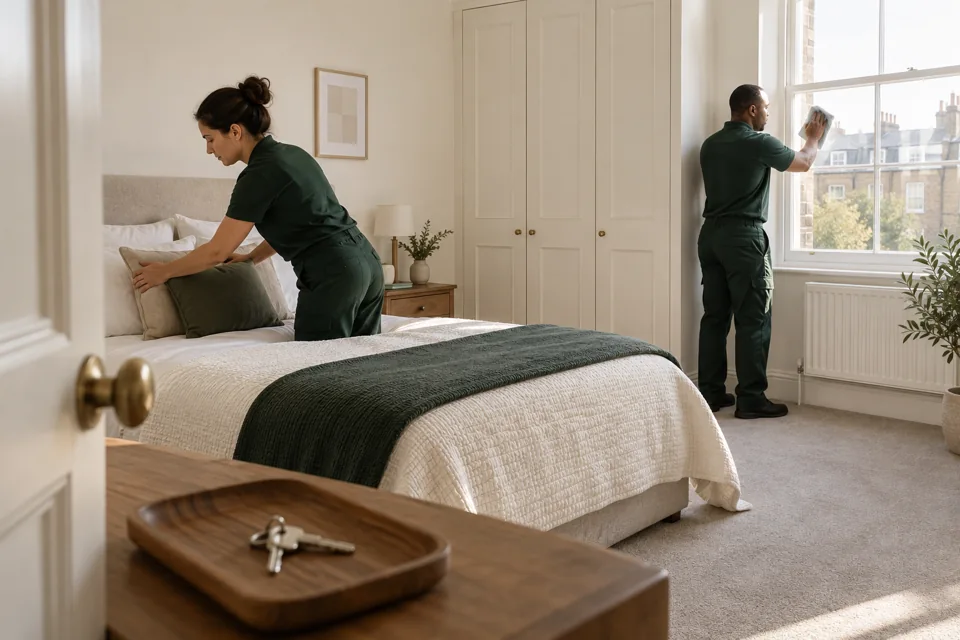
Illustration of keys and a furnished rental bedroom during cleaning

After the appointment

Keep a record.
Then hand over the keys.

Check the accessible areas against the agreed scope while you still have access. If a cleaning concern needs attention, contact the team with the location and a clear description rather than waiting until keys are no longer available. Keep the booking information and any invoice supplied, and take your own dated photographs of the property for your records.

A cleaning company does not decide whether a deposit is returned. The Tenancy Deposit Scheme’s guidance explains the importance of comparing evidence of cleanliness at the beginning and end of a tenancy. Cleaning is one part of the condition record, not a guarantee of an agent’s decision. This page provides cleaning-planning information, not advice on resolving a particular deposit dispute.

The questions
that affect moving day.

Does the property have to be empty? +

Explain exactly what will remain. An empty property usually gives clearer access to floors, cupboards and surfaces, but landlord-supplied furniture may stay. The team needs to know about that furniture and any boxes or belongings you cannot remove. Agree the accessible areas and handling arrangements before booking rather than assuming that cleaning includes clearing the property.

Are ovens and carpets automatically included? +

Ask explicitly. Oven and carpet cleaning are separate listed services, and each can affect the equipment, time and price required. State the oven type and carpeted rooms when you call. Confirm whether those tasks form part of the overall quote, what treatment is proposed and whether they need a separate appointment or drying allowance.

Can I use this service before moving into a property? +

Describe the property as it will be on the cleaning day and explain that you are moving in. The useful tasks may overlap with an empty-property clean, but access, appliances and the starting condition still need discussion. Moving-related property cleaning covers a similar planning conversation; choose the scope that fits the actual move.

Will the cleaning guarantee my deposit back? +

No. The service deals with agreed cleaning tasks; it cannot decide disputes about damage, missing items, rent or the terms of a tenancy. Keep the cleaning scope separate from the deposit decision and retain your own property records. Ask the relevant landlord, agent or deposit scheme about a particular disagreement rather than relying on a cleaning guarantee.

How long should I allow for the appointment? +

Request an estimate after explaining the rooms, condition, appliances and additions. Access delays and areas needing extra assessment can affect the visit. Working time is also different from drying time for carpet treatment. Plan the inspection and key return with a margin, and tell the team about fixed deadlines when requesting the quote.

What happens if building work is still taking place? +

Explain the situation before booking. Ongoing dust, workers moving through rooms and unfinished surfaces can make a final handover clean poorly timed. Agree whether the work needs to wait until renovation is finished or whether particular areas can be treated separately. A tenancy clean should not be used as an assumed substitute for clearing building debris or repairing unfinished work.

Arrange the clean
around the handover.

Have the postcode, property details, check-out date and specialist tasks ready. The team can discuss the work and quote before you organise the visit.

The images are original generated illustrations of property cleaning and preparation, not completed client jobs.

Call Now 020 3404 5122 ↗︎