An occasional visit does not need an ongoing schedule.
One-off cleaning is a standalone appointment with a scope agreed for the home at that time. It is useful when the immediate list matters more than arranging weekly or fortnightly help. The rooms can be occupied and in normal use; you do not have to be moving out to ask for an individual cleaning visit.
The important distinction is between the booking frequency and the depth of work. One-off describes a single appointment, not a promise that every difficult task is included. A short visit focused on the kitchen and bathroom differs from a detailed whole-home brief. Explain which you need so the proposed work and time are based on the actual request.
Build a workable agenda
The reason for the visit helps set the priorities.
Before visitors arrive
Focus on the spaces people will use: the entrance, sitting room, dining area, guest bedroom and bathroom. Let the team know the deadline and whether furniture or deliveries will obstruct access. Cleaning can be arranged around an agreed brief, but decorating, catering and preparing guest belongings remain different tasks.
After a busy period
Describe what has accumulated and where. Accessible dust, kitchen residue and bathroom soil may need different amounts of attention. A property that has been used heavily can require more working time than an occasional light clean, even if its room count is the same. Photographs help explain the starting point.
A few jobs together
Write a short list of the tasks you keep putting off. Separate the essentials from the optional additions rather than presenting every room as equally urgent. If time is limited, the team needs a clear order of importance. Agree any change to the requested work before expecting it to fit the original quote.
Kitchen and bathroom work needs a specific description.
For kitchens, discuss accessible worktops, sinks, taps, cupboard fronts, hob surfaces and suitable floors. For bathrooms, identify the bath or shower, basin, toilet, mirror and floor. Explain any heavier deposits or delicate finishes. The room name alone does not tell the cleaner whether you want ordinary surface work or attention to particular edges and fittings.
Appliance interiors, cupboard interiors and extensive limescale work should be raised separately. Cleaning the oven is a distinct appliance task; it is not established by asking for the kitchen to be cleaned. Damaged grout, worn sealant and discoloured fittings also need realistic expectations rather than a promise that cleaning will restore their original condition.
Accessible detail, with belongings accounted for.
Living areas and bedrooms may include dusting reachable surfaces, suitable floor cleaning and attention to agreed skirting boards or door areas. Identify fragile possessions and anything you prefer to move yourself. Personal papers, cables and small objects can take up much of the working space, so access should be discussed when the task list is created.
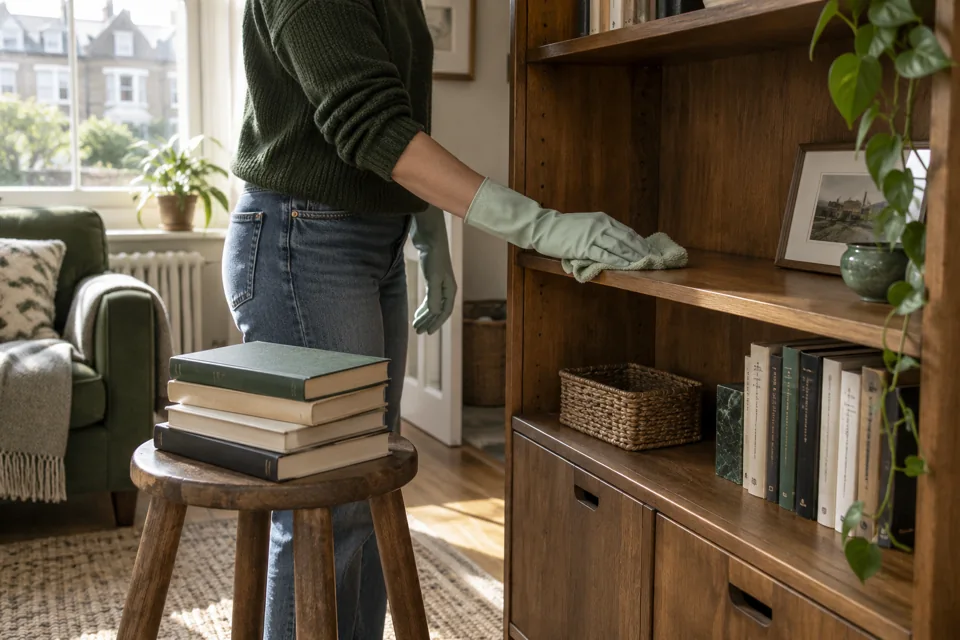
A shelf can only be cleaned as agreed around its contents. Sorting books, deciding what to discard or organising a wardrobe goes beyond an assumed dusting task. Keep valuable items secure and put belongings where you want them. The aim is to make the cleaning brief clear without asking the cleaner to make decisions about your possessions.
Choose the right depth for the starting condition.
If several rooms need more intensive attention to accumulated soil, explain this when enquiring about a deeper cleaning brief. A seasonal list of neglected household areas may fit spring cleaning. These descriptions help organise the work; they do not replace a written list of inclusions and exclusions.
Specialist fabric work, waste clearance, repairs and hazardous contamination are outside an ordinary household surface-cleaning assumption. Ask about the appropriate service when the problem is more specific. A carpet that needs treatment beyond vacuuming should be discussed as a carpet-cleaning job, with its material, stains and drying needs assessed separately.
On the day
Walk through the list before work begins.
At arrival, confirm the priority areas, access and any surfaces that require particular care. Mention previous damage and products already used on difficult marks. Suitable cloths, brushes, vacuuming or floor-cleaning equipment can then be selected for the agreed tasks. Check whether the team supplies all required items for your booking and explain any products you want excluded.
The practical sequence should avoid repeatedly crossing freshly cleaned areas or leaving essential rooms inaccessible at an inconvenient time. If someone is working from home, identify the room and discuss when it can be reached. Keep children and pets away from wet floors and the active working area, and leave a clear route between rooms.
Prepare access, rather than cleaning everything first.
Make the requested areas reachable. Clear loose belongings from the surfaces you want addressed and remove avoidable obstructions from the floor. You do not need to complete the cleaning tasks yourself beforehand, but heavy furniture moving or a substantial decluttering job should not arrive as an unmentioned addition.
Confirm the practical details
Entry arrangements, keys and the person available for questions.
Parking, stairs, lifts and building rules affecting arrival.
Water and power access where the agreed methods require them.
Fragile surfaces, care instructions and existing damage.
The deadline, priority rooms and tasks that are optional.
Tell the team if the condition changes between the enquiry and appointment. Extra belongings, ongoing trades or inaccessible rooms can alter what is achievable in the planned visit.
Allow time for the work, not just the room count.
Duration depends on the area, condition, number of tasks, contents and access. Cleaning a clear room is different from navigating around many small objects. A long gap in maintenance can also mean that the same surface requires more work. Ask for an estimate around your actual list and explain any time limit before the booking is confirmed.
Cleaning House London provides individual quotes. Establish what is included, what would cost extra and whether VAT or a minimum charge applies. There is no verified numerical one-off tariff on this page. When a new task is requested during the visit, confirm the effect on time and price instead of treating the original quote as an unlimited allowance.
Review the finished areas against the agreed brief.
Check the work while the scope is still clear and raise questions about an omitted priority or remaining mark. Cleaning can remove accessible soil; wear, staining and damaged finishes may remain. Ask about drying and surface care before placing objects back or walking across a damp floor. Any specialist addition can have its own aftercare requirements.
A standalone appointment does not oblige you to start an ongoing arrangement. If repeat tasks are the main difficulty afterwards, a regular schedule can be discussed on its own terms. Otherwise, retain the useful task list for a future occasional visit and update it when the home or priorities change.
Before the appointment
Questions about a single visit.
Can I book only two rooms? +
Specify the rooms and tasks when enquiring, rather than asking for a whole-home service and changing the brief on arrival. The team can discuss the proposed scope, availability and any applicable minimum charge. A smaller area can still involve substantial detail depending on its condition.
Is a one-off clean always a deep clean? +
No. The term describes a standalone booking. The depth depends on what is agreed, from selected surface work to a more detailed list. Tell the team about accumulated soil, appliance interiors or neglected areas so the quote is based on the work rather than the label.
Can the clean finish before my guests arrive? +
Give the deadline before arranging the appointment and allow for access, working time and any drying. Ask whether the requested list can be completed within that window. A preferred finishing time should be confirmed with the team, not inferred from an available arrival slot.
Do I have to stay at home? +
Agree access and the contact arrangement beforehand. Someone should be available to answer scope questions, even if they are not present throughout. Explain alarms, keys and building restrictions; do not leave entry instructions to an assumption made after the booking.
Can I change the task list on the day? +
Raise the change before work begins. Different tasks may require different products, more time or a revised quote. Confirm which original priorities would remain and whether the new work can be undertaken. The cleaner should not have to guess which tasks you intended to replace.
Will this remove every stain in the home? +
Describe individual marks and their surfaces for assessment. Ordinary cleaning is not a guarantee of stain removal or restoration. Some problems require specialist treatment; others relate to permanent wear or damage. A useful booking states the expected work without promising an outcome that cannot be established beforehand.
Bring the list. We can discuss the visit.
Call with your postcode, priority rooms, starting condition and preferred date.