The appliance, part by part
Oven cleaning
in London.
Racks, glass and the cooking cavity.
A closer look at what needs cleaning.
Cooking residue needs
a different kind of attention.
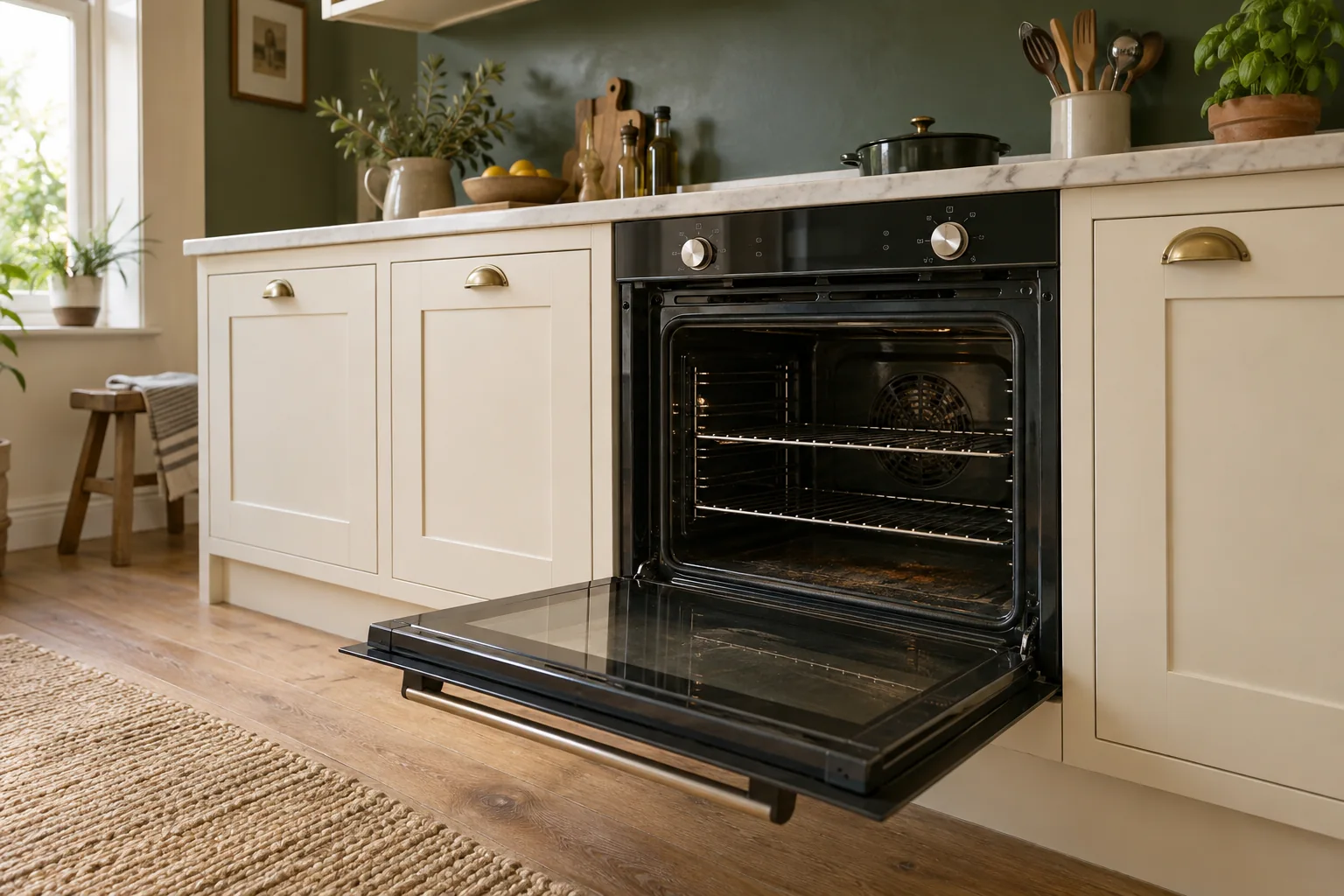
A wipe of the hob and kitchen worktop does little for grease baked onto an oven’s interior. Oven cleaning concentrates on the appliance itself: the cooking cavity, suitable removable accessories and accessible door surfaces. The work needs to account for the model and its materials, rather than treating every dark surface as ordinary enamel that can be scrubbed in the same way.
This service can suit a household catching up with an often-used oven, a kitchen being prepared for a move, or someone who would rather arrange the detailed work separately from routine cleaning. Explain the condition honestly when enquiring. A photograph of the open oven, its door and racks is usually more useful than simply describing it as dirty.
Out of the cooking cavity
Racks and trays
have their own workload.
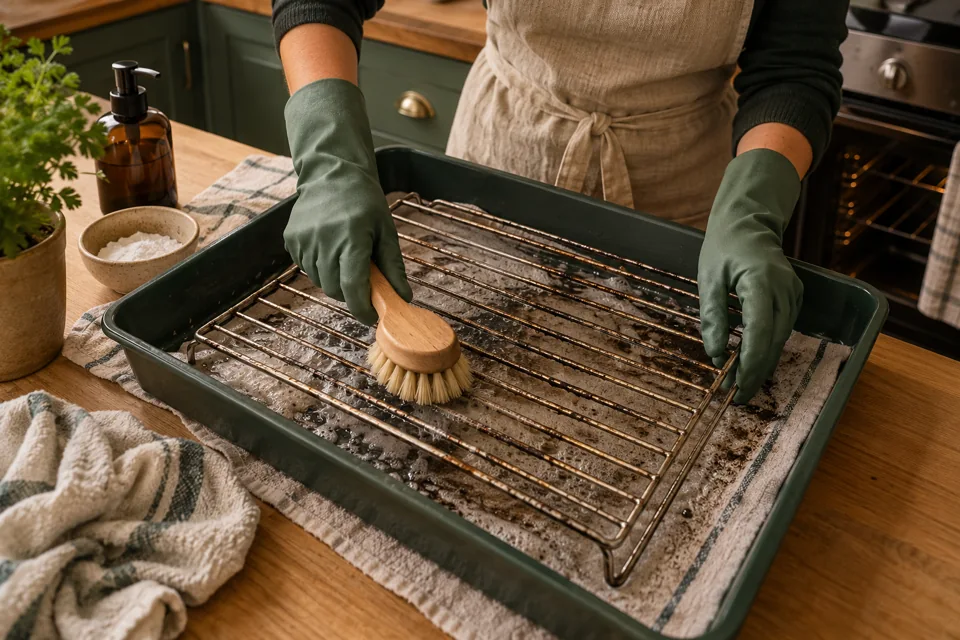
Count the racks, trays and other accessories you want included. Removable parts can carry substantial deposits on their undersides and around the joints, even when the upper surface appears reasonably clean. Confirm which pieces belong to the appliance and which are separate cookware; an oven booking should not be assumed to include every baking tin in the kitchen.
Suitable accessories may be removed for treatment and worked on separately, then rinsed and dried as the product and material require. Brushes, cloths and an appropriate degreasing method can be selected around their finish. The team should confirm the proposed process for your appliance; this page does not promise a particular dip tank or universal chemical treatment.
Identify the oven before choosing the treatment
One appliance can contain
several different surfaces.
| Part or feature | What to establish | Why it matters |
|---|---|---|
| Enamel cooking cavity | Condition, existing chips and permitted care products | Soiling and damage need to be distinguished before treatment. |
| Self-cleaning or catalytic surfaces | The model and manufacturer’s instructions | These surfaces can require a different approach from smooth enamel. |
| Door glass and seals | Accessibility, construction and any existing damage | Cleaning should respect the glass, seal and door mechanism. |
| Racks and telescopic runners | Which accessories are removable and included | The cleaning method must suit the particular accessory. |
| Gas, electric or combination appliance | Fuel type, compartments and specialist features | Access and scope cannot be inferred from the cabinet width alone. |
Have the make and model ready if possible. Range cookers, double ovens and combination appliances need an individual discussion about the compartments and accessories involved. Confirm that the team can undertake the requested work on the particular model before arranging access.
Inside the oven,
work around the construction.
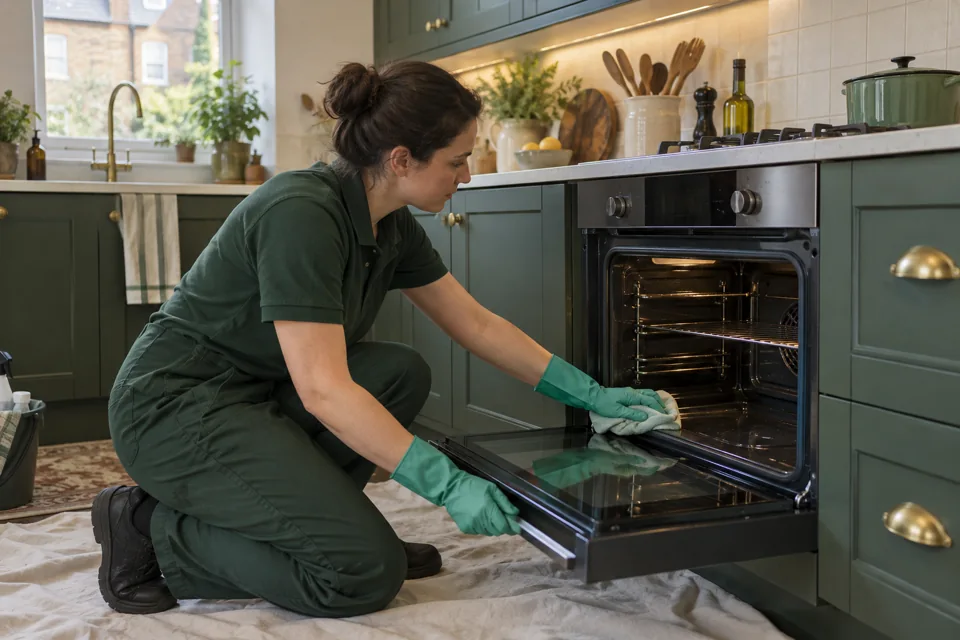
The visit begins with a look at condition and access. Point out previous repairs, loose fittings, damaged enamel, difficult hinges or any fault you have noticed. The cleaner can then establish what is safely accessible, protect the immediate working area and agree the treatment. A cleaning appointment is not a repair or diagnostic service for an appliance that is malfunctioning.
Products need time to act where permitted, followed by controlled removal of loosened deposits and residues. Working around corners, rails and the door opening takes more care than cleaning an uninterrupted flat surface. Parts should only be removed where the construction and instructions allow it; inaccessible spaces behind fixed panels are not automatically part of the clean.
The view through the door
Grease on glass.
Marks between panes.
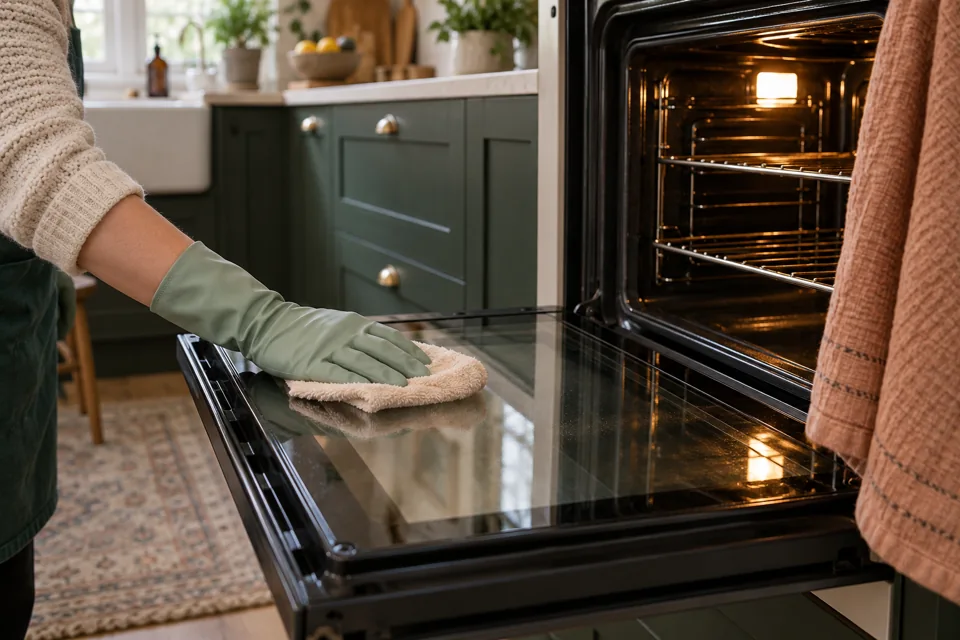
Accessible door glass can be included in the agreed scope. Grease on the inner surface is different from marks trapped between separate panes. Whether those panes can be reached depends on the door design and safe removal procedure. Send a clear photograph and ask about that specific area rather than assuming that every door can be dismantled.
Scratched glass, worn markings, discoloured trim and damaged seals will not become new through cleaning. Aggressive abrasion can create further damage, so the aim is suitable residue removal with the existing materials respected. Review any remaining marks with the team at the end, distinguishing accessible soil from wear or areas that could not safely be reached.
The oven must be ready
for safe cleaning access.
Do not cook immediately before the appointment. Leave the appliance switched off and allow it to cool, with clear access in front. Keep children and pets out of the working area. Tell the team about product restrictions and provide the manufacturer’s care instructions where available. Do not apply several household products just before the cleaner arrives; explain what has already been used.
Manufacturer guidance takes precedence over a generic cleaning recipe. Bosch’s oven care guidance, for example, stresses a cool, switched-off appliance and checking instructions for removable parts. Your own model’s manual remains the relevant reference. Product handling, rinsing and re-use requirements must follow the instructions for the method actually used.
Keep neighbouring appliances
visible in the quote.
A cooker hood, hob, microwave and kitchen cupboards are distinct tasks. If they need attention, list them individually and ask what can be arranged alongside the oven. A detailed kitchen clean may address a broader room brief, while repeat household cleaning concentrates on ongoing surface maintenance. Neither label establishes that a full appliance treatment is included.
When moving, place the oven explicitly on the end-of-tenancy checklist or move-out work list. For an occupied home with several accumulated jobs, discuss a combined one-off cleaning appointment. Confirm the total scope instead of relying on separate service names to imply additions.
Size is only one part
of the estimate.
Compartment count, accessory count, deposits, door access and the appliance’s construction all influence the work. Allow around two to four hours as an initial guide, with the actual duration confirmed for your oven and requested parts. Ask the team to assess the information you provide and confirm how much time to allow for your model and condition.
The price is quoted individually; no verified numerical tariff is published here. Ask whether the quote includes the requested racks, trays and door work, and whether VAT, a minimum charge or additional appliances affect the total. Confirm changes before extra work starts. Keep the agreed list available so there is a clear reference at handover.
Before cooking again,
check the handover instructions.
Ask when the appliance can be used after the actual cleaning method, whether any further drying or ventilation is needed and how the accessories have been replaced. There is no universal promise of immediate re-use. Follow the advice given for the products and appliance rather than running an improvised heat cycle to remove an unfamiliar smell.
Between appointments, deal with spills according to the manufacturer’s instructions once the appliance is safe to touch. Avoid letting cleaning become a substitute for investigating a fault: damaged controls, abnormal operation or a persistent problem need the appropriate appliance support. Cleaning can improve accessible soiled surfaces, but cannot guarantee performance, energy savings or an extended service life.
Appliance questions
worth asking before booking.
Can you clean a double oven? +
Provide the make, model and photographs of both compartments. Confirm that both are included, together with the accessories you want treated. A double oven involves more than the visible front panel, and the quote should reflect its actual construction and condition.
Are my baking trays included? +
List them when requesting the quote. Appliance trays and separate cookware should be identified individually, particularly where a coating needs specific care. The booking does not automatically cover every tray, roasting dish or saucepan stored in the oven.
Will you remove the oven door? +
Only discuss removal in relation to the particular model and safe procedure. Some doors or glass panels can be accessed; others require different handling. Explain what you want cleaned between panes and ask what is achievable before accepting a promise based on a different appliance.
Does a self-cleaning oven still need attention? +
Door edges, accessories and other areas may need separate care, depending on the model. Tell the team which cleaning features it has. Do not assume that standard oven cleaner belongs on every interior surface or that running the automatic programme is part of this appointment.
Can cleaning fix smoke or uneven cooking? +
Describe the issue, but do not book cleaning as a guaranteed repair. Residue and appliance faults are different matters. Seek the relevant manufacturer’s or repair support for abnormal operation; the cleaning scope should remain focused on safely accessible soil.
Do I need to pull the oven out of its housing? +
Do not remove a fitted appliance yourself in preparation. Clear access to the front and discuss anything beyond the normal cleaning reach with the team. Disconnecting supplies, altering the installation or moving a fixed appliance is not implied by an oven-cleaning booking.
Show us the appliance.
Specify the parts.
Call with the model, number of compartments and accessories, and the areas you want addressed.
These generated pictures illustrate oven-cleaning tasks. They are not customer results or photographs of company staff.