Kitchens are used, bathrooms need attention and floors collect everyday dust. Regular cleaning is about keeping those repeat jobs manageable, with a scope that reflects the rooms you use and the time available. A clear priority list helps a visit remain useful when the home is busy rather than becoming an ever-growing collection of unrelated requests.
The published regular-cleaning service includes weekly, fortnightly and monthly options. Discuss the schedule with the team and confirm availability. Frequency is not a measure of how well someone runs their home; it is a practical choice based on the rooms, household activity, budget and tasks you want help with.
Visit pattern
A useful reason to discuss it
What to keep in mind
Weekly
Frequently used kitchens, bathrooms and floors need repeat attention.
The scope should still be prioritised rather than unlimited.
Fortnightly
You manage some tasks yourself and want help with a regular list.
Soil and workload may build between visits, affecting the time needed.
Monthly
An occasional repeat appointment supports the household routine.
A longer interval does not automatically include a full deep clean.
Review the arrangement against what happens in the home. A change in household use, extra rooms or a lengthy gap between visits can alter the workload. Tell the team before expecting the original appointment to cover substantially different work.
The repeating kitchen tasks
Start with the surfaces you use every day.
Accessible worktops, sinks, taps, hob surfaces, cupboard fronts and suitable flooring are useful kitchen priorities. Agree which of these form part of the visit and what needs moving before work can begin. A worktop covered with personal items is a different task from the same surface cleared and ready to wipe.
Regular kitchen maintenance does not automatically include deep treatment of an oven, extractor or every appliance interior. A specialist oven clean should be discussed as a separate addition. Mention delicate worktops, painted fronts and any manufacturer’s care requirements so the proposed products and methods suit the surfaces rather than following one assumed approach throughout the room.
The bathroom: routine work, agreed detail.
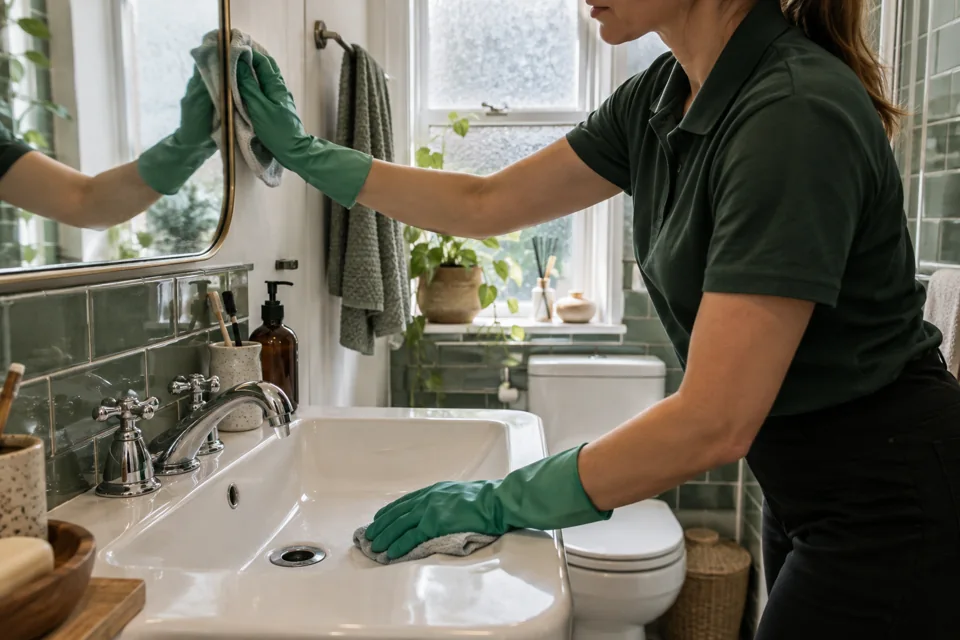
Basins, bath and shower surfaces, toilets, mirrors and floors can be placed on the repeat list. Different households use these areas differently, so explain your priorities. If one bathroom is rarely used and another needs more attention, the cleaning plan can be discussed around that distinction instead of assuming that each room represents equal work.
Heavy limescale, damaged sealant and permanent staining require realistic assessment. A regular appointment should not silently become a restoration or repair job. Point out changes in condition and ask whether additional time or a different service is needed. The useful question is what can be addressed safely within the agreed scope.
Dusting and floors need accessible space.
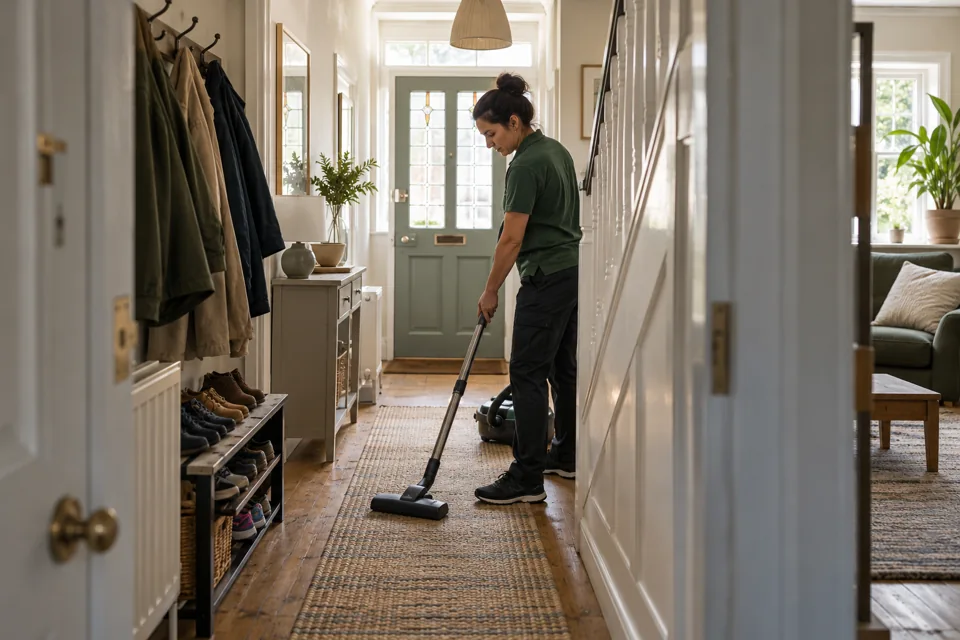
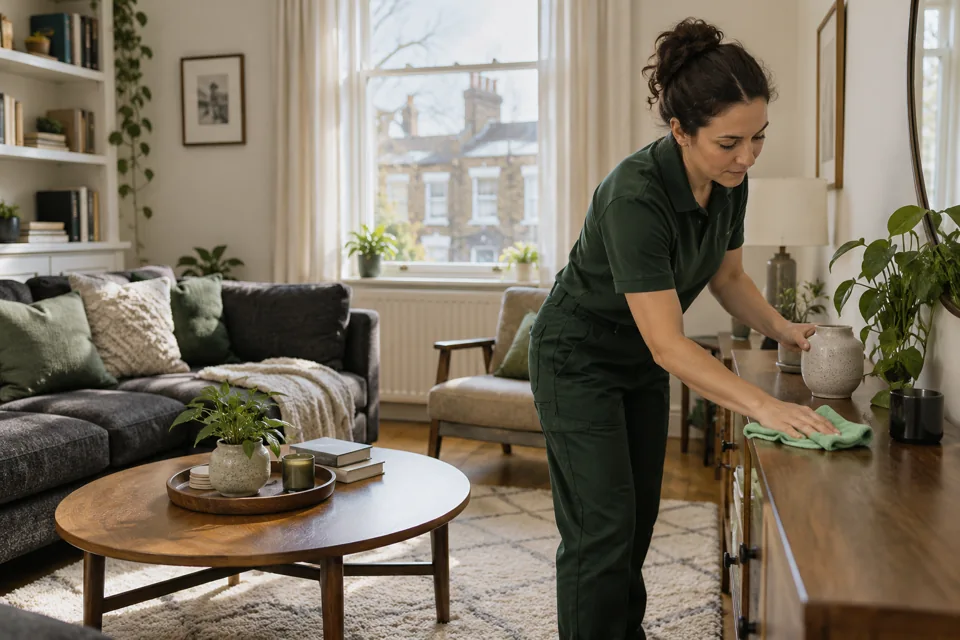
Discuss accessible furniture surfaces, vacuuming and suitable hard-floor cleaning for bedrooms and living areas. Small belongings, cables and furniture arrangement can affect the working route. Explain fragile items and anything you prefer to handle yourself. A routine appointment is easier to organise when those practical details are known rather than discovered room by room.
Heavy furniture moving, specialist fabric treatment and large-scale tidying are separate scope decisions. Vacuuming a carpet is different from specialist carpet cleaning. Clearing a wardrobe or deciding which belongings to discard is different from dusting accessible furniture. Keep those distinctions visible when setting priorities for repeat visits.
The list for each visit
Essential tasks first. Occasional tasks by agreement.
The repeat essentials
Identify the rooms and tasks you want addressed consistently. Kitchens, bathrooms and floors are common starting points, but your list should reflect actual use. State which tasks matter most when time or access is limited. A concise list helps avoid spending the visit on lower-priority work while an important room is left waiting.
The occasional extras
Accessible skirting boards, particular cupboard areas or neglected edges may need attention less frequently. Discuss these additions in advance and consider how they affect the scope. Do not assume that a rotating list means every extra task can be added to the same appointment without changing time or price.
A change in condition
If cleaning has been interrupted or a room needs a more detailed start, explain that before booking the next routine visit. Deep cleaning or a seasonal task list may be a more practical way to address the starting condition. The subsequent routine can then be planned around ongoing maintenance.
A repeat appointment still needs practical arrangements.
Agree entry, keys, alarms, parking and any building restrictions directly with the team. Explain whether someone will be at home and who can answer questions during a visit. Pets should be kept away from the working area as appropriate. A schedule on the calendar does not replace a clear arrangement for reaching the rooms safely.
Confirm products and equipment for the chosen service, including any items you prefer to provide. Mention allergies, delicate finishes and product restrictions without assuming that a general household cleaner suits every material. If access or instructions change, update the team beforehand rather than relying on details from a much earlier visit.
The visit length should match the priorities.
Working time depends on property size, the rooms included, condition, clutter and the detail requested. A larger home with a limited priority list can be a different job from a compact home with many small objects or heavily used rooms. Discuss the work rather than expecting one standard duration to fit both properties.
Cleaning House London publishes individual quotes. Ask what the repeat appointment covers, whether VAT or a minimum charge applies and how additional tasks are priced. Confirm changes before adding rooms or specialist work. A quoted routine should be a shared understanding of the visit, not an assumption that every household request is already included.
Between visits, keep the working areas usable.
You do not need to clean the home in preparation for a cleaning visit, but making agreed surfaces accessible can help. Put personal belongings where you want them, clear avoidable obstructions and tell the team about spills or damage that need assessment. Follow the relevant surface-care instructions rather than trying several products on an uncertain mark.
Review the arrangement periodically. If priorities have changed, discuss a revised list or frequency. A single exceptional job can be handled as an additional one-off appointment where appropriate, instead of quietly expanding every repeat visit. Keep a record of the scope so questions about what was requested can be addressed clearly.
The recurring appointment
Questions about making the routine work.
Clarify the service arrangements when you call, especially where access, scheduling or extra tasks matter to your household.
Can I choose weekly or fortnightly visits? +
These are among the published regular-cleaning options. Tell the team your postcode, preferred schedule and priority rooms so availability and the practical scope can be discussed. The interval is only part of the arrangement: confirm the work, access and quote before treating a calendar preference as a completed booking.
Will the same cleaner attend every time? +
Ask about the current staffing arrangements directly. This page does not promise the same individual for every appointment, and a repeat schedule alone does not establish that guarantee. Clear written priorities, access instructions and information about delicate surfaces remain useful regardless of who is assigned to the particular visit.
Do regular visits include tidying? +
Explain the tasks you mean by tidying. Making an accessible surface ready to clean is different from organising papers, sorting wardrobes or deciding what to throw away. Agree those boundaries before booking. Personal belongings and valuable items are best identified clearly so the appointment is spent on the requested cleaning work.
Can I add another room to the routine? +
Discuss the change in advance. Extra rooms, altered use or more detailed tasks can affect the time and price, even where the overall home is unchanged. The team needs to assess the revised workload rather than assume it fits the existing visit. Ask for the updated scope and quote before the addition begins.
What happens after a long gap between visits? +
Describe the current condition rather than expecting the usual routine to address every accumulated task in the same time. A more detailed appointment may be appropriate first, followed by a repeat plan. The decision should be based on the rooms and work needed, without treating a long gap as an automatic obligation to book several services.
How do I change or cancel an appointment? +
Contact the team and check the applicable arrangements before assuming a change has been accepted. Ask about notice requirements and any relevant charges when booking the repeat service. This page does not invent a cancellation period or fee; retain the confirmed terms and communicate changes as early as you reasonably can.
Choose the priorities. Discuss the schedule.
Tell the team which rooms you use most, the help you need and the frequency you have in mind.