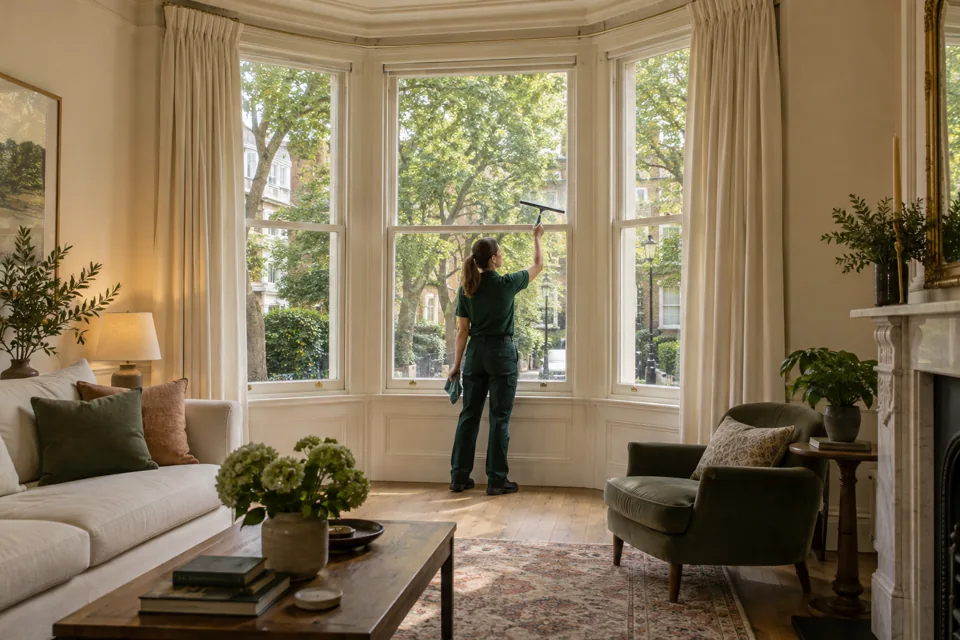
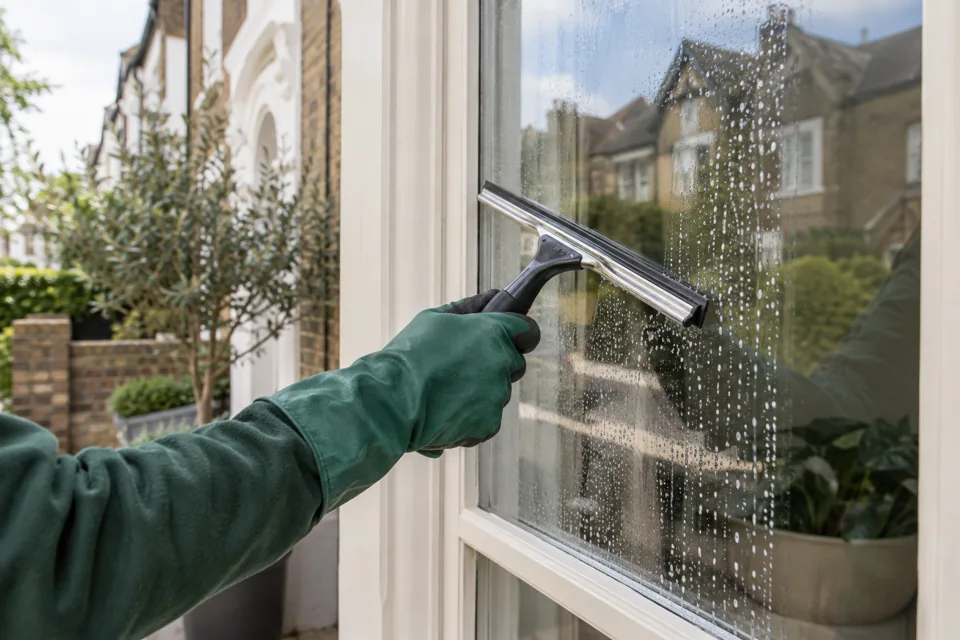
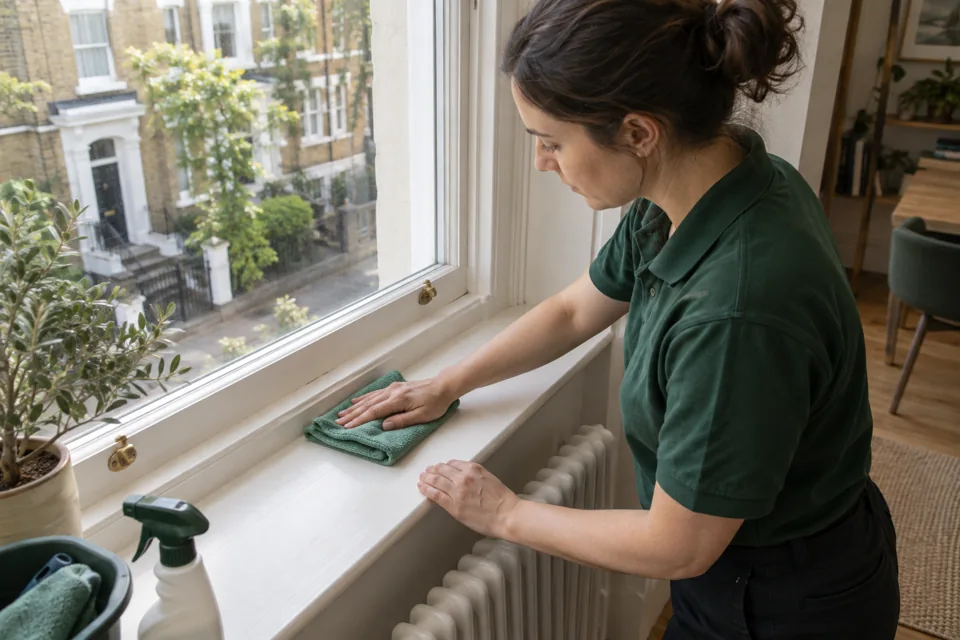
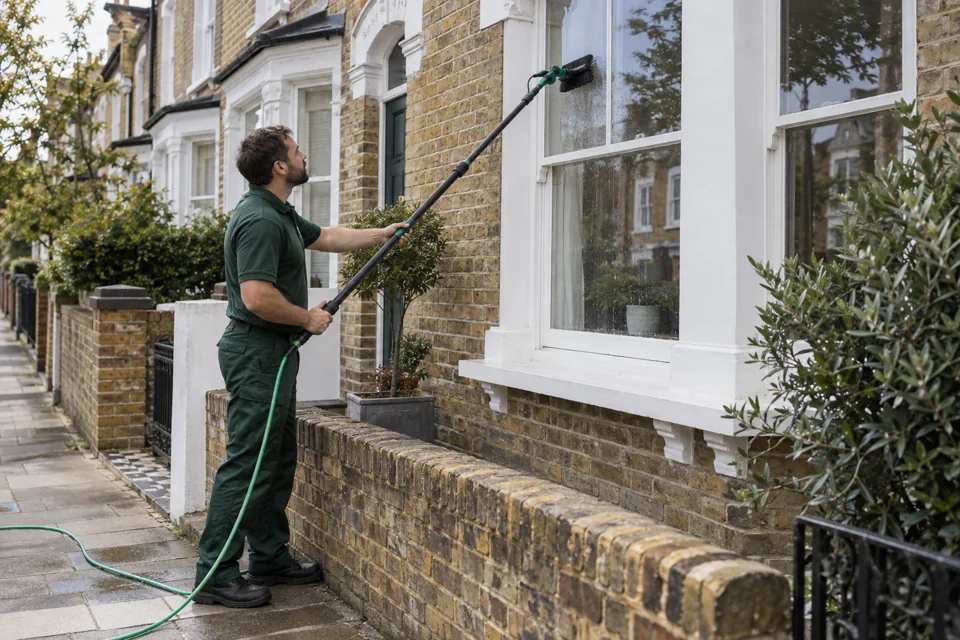
Those are the useful first questions when arranging a window clean. A ground-floor bay, a third-floor sash and a rooflight can need very different access arrangements. Tell the team which windows you want cleaned, whether the work is inside, outside or both, and anything that makes the panes difficult to reach.
Cleaning House London offers window cleaning as a separate service. Its published description includes glass, frames and sills, with tools such as squeegees and water-fed poles. The practical scope still needs to be agreed for your property: not every surface, opening or height can be approached in the same way.
Interior glass collects fingerprints, household dust and marks near kitchen or bathroom areas. Curtains, blinds, plants and furniture can restrict access even when a pane is at a convenient height. Identify what can be moved and whether the window opens normally. Tell the cleaner about fragile objects and delicate flooring beneath the working area.
Internal cleaning may also involve accessible frames and sills if these form part of the quote. Tracks, recesses and stained sealant are separate details to discuss. A frame can hold ingrained dirt or deteriorated paint that will not respond like an intact pane of glass. Agree those boundaries before expecting every part of an opening to look newly installed.
The side facing the weather
Exterior panes collect road dust, rain marks and other deposits. The route to them matters: gates, narrow side passages, rear gardens, extensions and parked vehicles can all change the available working space. Give the team a useful description rather than only the number of windows on the front of the house.
Outside cleaning does not automatically include balconies, roofs, gutters or every glazed surface connected to the property. A conservatory, skylight or awkward rear window may need a separate assessment. Mention these when booking so the team can confirm whether they can be approached and how they affect the scope.
The method follows the opening
Tools should suit the glass and the reach.
A conventional squeegee and suitable cloths can be used for reachable glazing. Water-fed pole work is another advertised approach, where the location and equipment make it appropriate. These are methods to discuss, not a promise that one tool will deal with every window in the building. Access, the surface and the condition determine the practical plan.
Ask whether the proposed work includes the edges of the pane, frame surfaces and sills. If water will be used near entrance routes or interior finishes, clarify how the surrounding area will be managed. The illustrations show ordinary window-cleaning tasks; they do not establish a maximum working height, a particular equipment brand or a guaranteed result for difficult glazing.
Before anyone reaches upward
The route matters as much as the pane.
Working at height must be planned rather than improvised around a booking. The Health and Safety Executive’s window-cleaning guidance emphasises avoiding height work where reasonably practicable and selecting suitable equipment. Tell the team about access early; do not try to make a difficult window reachable by placing furniture beneath it or expecting someone to lean out.
Explain the floor level, whether outside ground is accessible, any locked routes and building-management rules. A window visible from the street may still be obstructed by an extension or an inaccessible courtyard. Appointment availability is separate from safe access: a free time slot does not mean every height or location can be cleaned.
The frame has its own condition.
Painted timber, metal and uPVC frames have different finishes and can age differently. Point out flaking paint, cracked seals, loose fittings or previous damage before work starts. Cleaning removes accessible soil; it does not repair a defective frame or restore a worn coating. Be clear about whether the request is routine cleaning or an attempt to deal with a particular deposit.
Some glass has specialist coatings, films or manufacturer’s restrictions. Keep that information available and mention it before a treatment is proposed. Do not assume that a product used elsewhere in the home is suitable. Heavy mineral deposits, paint or adhesive residues should be identified separately; removal needs assessment rather than an automatic promise of scraping every mark away.
Make room for the actual work.
Tell the team which elevations and interior panes you want included.
Remove small personal items from accessible sills and the working route.
Discuss curtains, blinds, furniture and anything too heavy or delicate to move.
Explain alarms, keys, gates and entry instructions for rear or shared areas.
Keep pets and children away from the cleaning area and equipment.
Provide any known glass or frame care instructions and mention damaged fittings.
If access depends on a building manager or concierge, arrange the necessary permission in advance. Do not assume that a communal hallway, external tap or parking space can be used simply because you occupy a flat in the building. Tell the team about restrictions that could interrupt the visit.
Timing depends on the property and conditions.
The number of panes is only part of the workload. Window size, divided lights, frames, condition and access can affect the time. Interior and exterior work may require different arrangements, while a property with awkward routes can take more organisation than a straightforward front elevation. Give the team those details when asking for an appointment estimate.
Outdoor conditions can affect whether work should proceed as planned. Discuss arrangements for weather-related changes and access delays rather than assuming that a booking is unaffected by every condition. If the clean is linked to a move, renovation or inspection, mention the deadline early and leave a practical margin.
Clean glass is not replacement glass.
Routine cleaning can remove surface dirt and marks that respond to a suitable process. Scratches, etched areas, failed seals and staining within a glazed unit are different problems. If a window appears cloudy between panes, describe that when requesting the service; external wiping cannot reach the inside of a sealed unit. Keep cleaning expectations separate from a glazing repair.
After the visit, check the agreed areas when the glass can be assessed properly. Contact the team with the location of any concern and the relevant details. Avoid adding a different cleaner or abrasive treatment immediately, especially on a coated surface. Keep the scope and any limitations discussed before work for reference.
Cleaning House London provides individual quotes. Ask about glass sides, frames, sills, unusual deposits, access and any minimum charge, then confirm the total and VAT position. Cleaning after building work may need residue assessment beyond an ordinary glass clean. For a tenancy handover, identify window requirements in the property checklist. A seasonal home clean and ongoing domestic visits cover different tasks; window work should be included explicitly if you want it arranged alongside them.
Questions about the panes you have
Before booking the window clean.
Can I book only the inside of my windows? +
State that clearly when you call. An interior-only brief should identify the rooms, number of panes and any difficult access around furniture or blinds. Ask whether accessible frames and sills are included. Interior access does not automatically make a high or awkward pane suitable for cleaning, so describe those features before an appointment is agreed.
Are frames and sills part of the service? +
The published service describes them, but the practical scope needs confirmation for your property. Recesses, tracks, flaking finishes and heavily affected areas can require a different amount of work from accessible intact surfaces. Mention those conditions and ask what the quote includes rather than treating the word window as a complete specification.
Will cleaning remove scratches or cloudiness? +
Cleaning is intended for removable surface soil, not repair of scratched or damaged glazing. Cloudiness can have more than one cause, including issues that are not on an accessible outer surface. Describe the appearance and any known problem. The cleaner can discuss whether cleaning is appropriate, but a glass-cleaning appointment should not be sold as a replacement for glazing repair.
Can you clean windows above an extension? +
Explain the layout and access before booking. An extension, roof, courtyard or narrow passage can prevent a straightforward approach even where the pane is not especially high. The team must assess the available route and suitable equipment. Do not create improvised access or assume that someone will climb onto a roof as part of an ordinary window clean.
How often should I arrange window cleaning? +
Choose a frequency that reflects the conditions and your priorities rather than a universal rule. Windows near busy roads, frequently touched interior panes and sheltered rear glass can accumulate different amounts of soil. Discuss a repeat arrangement if useful, and review it against the actual condition instead of booking the same interval for every surface automatically.
What should I mention about newly installed glass? +
Keep the manufacturer’s care information and explain any film, coating or installation residue. Newly installed glazing should not be treated as permission to remove every mark with a standard product or tool. Describe the installation work and any restrictions, then confirm whether a routine window clean is appropriate or specialist advice is needed first.
Describe the windows. We can discuss the access.
Your postcode, the sides to be cleaned and any difficult openings help define the work. Call to check the scope, appointment and quote.